
Last Updated: October 30, 2026
Quick Summary
Choose a clean beauty SPF 50 tinted sunscreen stick by checking for broad-spectrum mineral filters, iron oxides for tint, and a finish that matches your skin type. Verify any clean claim against the full ingredient list and third-party certification like COSMOS NATURAL, then compare price per gram and shade range before buying.
- Test the tint on your jawline, not your hand, since hand skin runs darker and warmer.
- Reapply every 2 hours or after swimming, sweating, or towel drying.
- Divide price by gram weight to compare true cost per use, not shelf price.
- The EWG found only about one in four of over 1,700 sunscreen products met its standards.
- Regnal Radiance's Sun Protection SPF50 Stick with Tint costs $18.00 and suits all skin types.
Table of Contents
- Why a Clean Beauty SPF 50 Tinted Sunscreen Stick Belongs in Your Routine
- What Makes the Best Tinted Sunscreen Stick for Face
- Clean Beauty Sunscreen Ingredients to Look For (and Avoid)
- How to Apply Sunscreen Stick for Even, Reliable Coverage
- How Often to Reapply Sunscreen (and How to Do It Over Makeup)
- Comparing Clean Tinted SPF 50 Sticks: What the Numbers Say
- Add Regnal Radiance Sun Protection SPF50 Stick with Tint to Your Bag
- Frequently Asked Questions
Why a Clean Beauty SPF 50 Tinted Sunscreen Stick Belongs in Your Routine
A clean beauty SPF 50 tinted sunscreen stick solves a problem most sunscreens create: it protects skin without leaving a chalky film or demanding a full morning routine. At Regnal Radiance, we built ours around a simple idea. Protection should be the easiest step in your day, not the one you skip.
The stakes are higher than most people assume. The Environmental Working Group reviewed more than 1,700 sunscreen products and found that only about one in four met its standards for adequate protection and avoiding ingredients of concern (EWG Sunscreen Guide). That gap matters if you have sensitive skin.
Here is the core argument of this guide: the best tinted sunscreen stick for face is not the one with the highest SPF number. If you want the wider case for switching, our guide on why clean beauty is better in 2026 covers the fundamentals.
What Makes the Best Tinted Sunscreen Stick for Face
The best tinted sunscreen stick for face combines broad-spectrum SPF 50 protection, mineral filters that suit sensitive skin, and a tint that blends rather than sits on top.
Broad-spectrum protection means the formula guards against both UVA and UVB rays. UVA drives premature aging and penetrates deeper; UVB causes burning. A stick labeled only "SPF 50" without broad-spectrum wording covers you for burning but not for the damage that shows up a decade later.
Mineral filters, zinc oxide and titanium dioxide, sit on the skin's surface and deflect both ray types. They tend to suit reactive skin better than chemical filters, which is why most clean tinted sticks are mineral-based.
The format itself is the underrated feature. A stick glides on with no hands, no drips, and no mirror. That is the difference between a product you use daily and one that lives in a drawer.
Finish, Tint, and White Cast Across Skin Tones
White cast is the mineral sunscreen problem everyone warns about, and it is real. Zinc oxide and titanium dioxide are white powders. On deeper skin tones, an untinted mineral formula can leave a gray or ashy layer that no amount of blending fixes.
Iron oxides are the fix. These pigments, the same ones used in foundation, give a tinted stick its color and help offset the whitening effect of mineral filters. A well-tinted formula should disappear into the skin rather than announce itself.
Finish matters too. Matte finishes suit oily and combination skin but can look flat on dry skin. Radiant and dewy finishes flatter dry skin but can slide on oily skin by afternoon. An invisible finish is the goal for most people: neither shiny nor powdery.
Test the tint on your jawline, not your hand. Hand skin runs darker and warmer than facial skin, and a stick that matches your hand can look two shades off on your face.
Clean Beauty Sunscreen Ingredients to Look For (and Avoid)
A clean sunscreen formula favors mineral filters and skips ingredients that commonly trigger reactions in sensitive skin. The label should tell you what is inside without requiring a chemistry degree.
Look for:
- Zinc oxide and titanium dioxide as the active filters
- Iron oxides for tint and visible-light protection
- Natural ingredients such as soothing plant oils and butters that support the skin barrier
- A water-resistant claim if you swim, sweat heavily, or spend long days outdoors
- Vegan and cruelty-free labeling if that aligns with your values
Watch for:
- Fragrance and essential oils, frequent irritants for reactive skin
- Alcohol high on the ingredient list, which can dry out already-dry skin
- Chemical filter blends if you have reacted to them before
For a deeper list, our breakdown of ingredients to avoid for sensitive skin walks through the specific names to scan for on a label.
How to Verify a Clean Formula Claim
"Clean" is a marketing word, not a regulated one. No single authority defines it, which means any brand can print it on a box. Verification takes three checks.
First, read the full ingredient list, not the front of the package. Ingredients are listed in descending order of concentration, so anything near the end is present in small amounts.
Second, look for third-party certification. COSMOS NATURAL is one recognized standard that audits formulations and sourcing. A certification logo means an outside body checked the claim, not just the brand's marketing team.
Third, learn to spot hidden irritants that hide behind friendly names. Our guide on identifying hidden irritants in skincare covers the common ones. A formula can be plant-based and still irritate your skin, so "natural" and "gentle" are not the same thing.
How to Apply Sunscreen Stick for Even, Reliable Coverage
Most people apply far less sunscreen than the label assumes, and a stick makes under-application easy to miss. The fix is mechanical: know how much product your face actually needs and repeat the same passes every time.
Sun Protection SPF50 Stick, with tint →
A stick does not dispense in measured amounts, so the practical question is how many passes to make. Applying enough product to cover the skin visibly and blending it in is the simplest guide.
A simple routine:
- Apply as the last step of your morning skincare, before makeup.
- Swipe the stick over each area of the face until covered.
- Blend with fingertips until the tint disappears into the skin.
- Let it set for a minute before foundation.
- Apply before sun exposure.
The four-pass rule is the part most guides skip. Coverage you can see is coverage that works.
The product is described as gentle enough for delicate areas like around the eyes and nose, and the stick format makes targeted application simple.
For a deeper walkthrough of building a morning routine around a stick, see our guide on layering sunscreen with skincare.
How Often to Reapply Sunscreen (and How to Do It Over Makeup)
Reapply every 2 hours or after swimming, sweating, or towel drying, as the product's usage directions state.
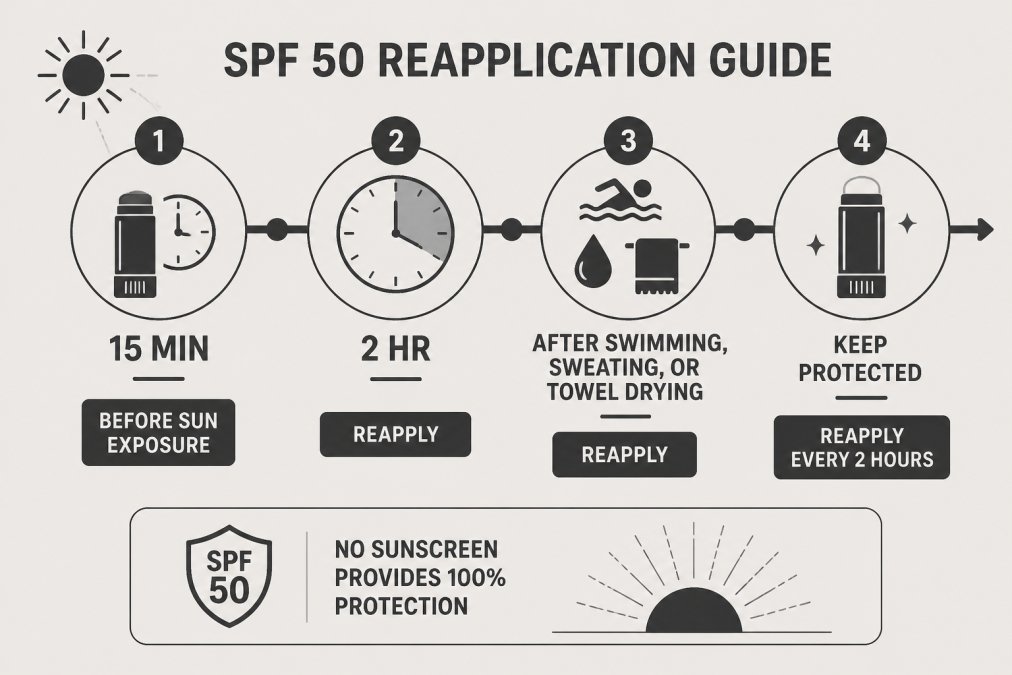
Reapplying over makeup is where most routines collapse. A tinted stick solves it better than a cream. Swipe directly over foundation, then tap the edges with a fingertip to blend.
One honest caveat: the EWG considers the added benefit of very high SPF numbers limited compared with lower-SPF formulas, and no sunscreen provides 100% protection (EWG's 2026 sunscreen guidance). Reapplication discipline matters more than chasing a higher number. Pair the stick with shade and protective clothing on long days outdoors.
Comparing Clean Tinted SPF 50 Sticks: What the Numbers Say
Comparing clean tinted SPF 50 sticks comes down to a structured side-by-side rather than a single headline number.
| Factor | What to Record | Why It Matters |
|---|---|---|
| Protection | Broad-spectrum SPF 50, UVA and UVB | SPF alone does not cover aging rays |
| Filters | Zinc oxide and titanium dioxide percentages if listed | Mineral filters suit sensitive skin; concentration affects feel |
| Tint range | Number of shades and depth range | Determines white-cast risk on deeper skin |
| Finish | Matte, radiant, or invisible | Must match skin type and climate |
| Format | Stick weight in grams and price per gram | Reveals true cost per use |
| Water resistance | Claimed duration in minutes | Matters for swim and sweat |
| Claims | COSMOS NATURAL, vegan, fragrance-free | Separates verified from marketing |
Price per gram is the factor buyers overlook most. A stick that looks cheap per unit can cost more per use if it runs out in three weeks.
Shade range deserves its own pass. A tinted stick with two shades will not serve the same range of complexions as one with six. Look for iron oxide percentages and whether the brand publishes swatches on multiple skin tones.
Testing volume is worth checking too. NBC Select reported testing more than 110 sunscreens over six weeks for its ranking (NBC Select's face sunscreen testing), which shows how much variation exists between formulas that look identical on a shelf.
If you are benchmarking brands before you commit, our roundup of top rated clean beauty brands gives you a starting shortlist. Then compare each one on the factors above rather than on packaging.
Regnal Radiance's Sun Protection SPF50 Stick with Tint sits at $18.00. It is mineral-based, gentle enough for sensitive skin, suitable for all skin types, and compact and blendable for on-the-go touch-ups.
Add Regnal Radiance Sun Protection SPF50 Stick with Tint to Your Bag
The hardest part of sun protection is not choosing a formula. It is building a habit that survives a real morning, a long afternoon, and a commute home. A tinted stick removes the friction that kills most routines: no mirror, no hands, no excuse.
Regnal Radiance makes that habit easier. Our SPF50 Tinted Sunscreen Stick delivers broad-spectrum UVA and UVB protection with a smooth, blendable tint. The mineral-based formula is gentle enough for sensitive skin and delicate areas around the eyes and nose, and the compact stick format is made for on-the-go touch-ups.
You can add the Sun Protection SPF50 Stick with Tint to your bag and keep protection within reach wherever the day takes you.

Frequently Asked Questions
What should I look for in a clean beauty tinted sunscreen stick?
Look for a mineral-based formula with zinc oxide or titanium dioxide for broad-spectrum UVA/UVB protection at SPF 50. Check that the tint uses iron oxides for a natural finish across skin tones. The formula should be gentle enough for sensitive skin and free of unnecessary additives. A compact stick format makes reapplication practical. Regnal Radiance's Sun Protection SPF50 Stick with Tint meets these criteria at $18.00, with a blendable tint that glides on evenly for a skin-like finish.
How do you apply a tinted sunscreen stick evenly?
Swipe the stick generously across all exposed areas, then blend with clean fingers or a sponge for even coverage. Apply as the last step of your morning skincare routine before makeup. Pay attention to delicate areas like around the eyes and nose. For reliable SPF 50 protection, use enough product to cover the skin visibly, then blend. Reapply every two hours or after swimming, sweating, or towel drying. The smooth, blendable tint in Regnal Radiance's stick makes touch-ups quick and mess-free.
Does tinted sunscreen leave a white cast?
A tinted mineral sunscreen stick can reduce white cast because the iron oxides in the tint help offset the pale residue common with zinc oxide and titanium dioxide. However, performance varies by shade range and formula. Look for a stick described as blendable and suitable for a range of skin tones. Regnal Radiance's SPF50 Stick with Tint is formulated to glide on evenly for a natural, skin-like finish across a range of skin tones, making it a practical choice for daily use.
How often should you reapply SPF 50 sunscreen?
Reapply every two hours during sun exposure, and immediately after swimming, sweating, or towel drying. A tinted sunscreen stick makes reapplication portable and no-mess, so you can touch up on the go. Apply generously before sun exposure as the last step of your morning routine. Remember that no sunscreen provides 100% protection, so limit prolonged sun exposure and wear protective clothing where possible, even when using SPF 50.
The challenge is simple: most people abandon sunscreen because the product makes it inconvenient. Build the four-pass habit, reapply every two hours, and choose a formula your skin tolerates. Get started with Regnal Radiance and make daily protection the easiest step in your routine.
