
Table of Contents
- Why Certain Ingredients Trigger Sensitive Skin Reactions
- 12 Common Chemical Skin Irritants to Avoid
- Fragrance in Skincare and Sensitive Skin: Why 'Unscented' Isn't Always Safe
- How to Patch Test Skincare Products Before Full Use
- Skincare Ingredients for Sensitive Skin: What to Look For Instead
- Reading Ingredient Labels: Synonyms and Hidden Names to Know
- Conclusion: Making Informed Choices for Reactive Skin
- Frequently Asked Questions
Last Updated: October 9, 2026
Why Certain Ingredients Trigger Sensitive Skin Reactions
If your skin stings, reddens, or itches after a new product, you are not imagining it, and the ingredients to avoid are often hiding in plain sight on the label. Ingredients to avoid for sensitive skin are the ones most likely to strip the skin barrier, trigger an allergic response, or simply overwhelm a nervous system that is already on high alert.

The American Academy of Dermatology's guidance on sensitive skin notes that sensitive skin is not one condition but a collection of symptoms, including redness, dryness, itching, and stinging, that can have very different causes. Some reactions come from irritation, some from a true allergy, and some from a barrier that has been quietly weakened by months of harsh cleansing.
Irritation vs. Allergy vs. Sensitivity Flare: What's the Difference?
Irritation is a direct chemical injury to the skin surface. It shows up where you applied the product, often within minutes to hours, and it burns or stings more than it itches.
Allergic contact dermatitis is an immune response. It can take 24 to 72 hours to appear, may spread beyond the application site, and often itches intensely. Mayo Clinic's overview of contact dermatitis explains that allergic reactions frequently develop only after repeated exposure, which is why a product can work for weeks before it suddenly does not.
A sensitivity flare is the slow burn. Your barrier is compromised, so everything stings, even water. This is the pattern most people miss, because no single product is the culprit.
12 Common Chemical Skin Irritants to Avoid
The most frequent offenders fall into a handful of families: surfactants, alcohols, preservatives, fragrance, exfoliating acids, and certain botanicals. Below is the list we walk through with anyone rebuilding a routine for reactive skin, along with the label names you will actually see on an INCI list and why each one causes trouble.
- Sodium lauryl sulfate (SLS) and sodium laureth sulfate (SLES), anionic surfactants that strip barrier lipids; SLS is the most reliably irritating surfactant in patch-test literature.
- Ammonium lauryl sulfate (ALS), a close relative of SLS with a similar irritation profile.
- Denatured alcohol and SD alcohol, volatile drying alcohols that disrupt the barrier in leave-on formulas; fatty alcohols like cetyl and stearyl alcohol are not the same thing.
- Formaldehyde releasers such as DMDM hydantoin, diazolidinone, imidazolidinyl urea, and quaternium-15, preservatives that slowly release formaldehyde and are common contact allergens.
- Methylisothiazolinone (MI) and methylchloroisothiazolinone (MCI), preservatives restricted in leave-on cosmetics in the EU because of rising sensitization rates.
- Parfum and fragrance, an umbrella term that can hide dozens of undisclosed compounds, including linalool and limonene.
- Essential oils including citrus, peppermint, eucalyptus, and lavender, natural does not mean non-reactive; these contain the same volatile compounds found in fragrance.
- Glycolic and lactic acid in high concentrations, alpha-hydroxy acids that exfoliate by loosening corneocyte bonds and can sting compromised skin.
- Salicylic acid used daily without buffering, a beta-hydroxy acid that is useful for congestion but harsh on a reactive barrier.
- Retinol and retinyl palmitate introduced too quickly, accelerates cell turnover and commonly causes redness, flaking, and stinging during the adjustment period.
- Synthetic dyes such as FD&C Yellow No. 5 and Red No. 40, added for color, not function, and a frequent culprit in reactions to otherwise gentle formulas.
- Nickel and cobalt traces in cosmetics and applicators, metal allergens that can show up in pigments and even in the metal of eyelash curlers or tweezers.
Sulfates and Harsh Surfactants
Surfactants are what make cleansers foam and lift oil. The problem is that strong ones do not distinguish between the oil you want gone and the lipids your barrier needs. SLS is the classic example: it is an effective degreaser, which is exactly why it can leave skin tight, dry, and reactive. On a label, look for sodium lauryl sulfate, sodium laureth sulfate, and ammonium lauryl sulfate, the three most common offenders in cleansers and body washes.
Sulfate-free and soap-free cleansers swap in gentler surfactants such as coco-glucoside, coco-betaine, or sodium cocoyl isethionate. They foam less. That is the trade-off, and it is a good one for sensitive skin.
Drying Alcohols and Preservatives
Not every alcohol is a problem. Cetyl alcohol and stearyl alcohol are fatty alcohols that actually soften skin. Denatured alcohol and SD alcohol are the drying kind, and in a leave-on product they can weaken the barrier over time.
Preservatives are trickier, because no preservative means contamination. The goal is not elimination but choosing formulas built around preservatives with lower sensitization profiles, and avoiding the ones most often flagged in patch-test clinics, particularly methylisothiazolinone, methylchloroisothiazolinone, and the formaldehyde releasers DMDM hydantoin, imidazolidinyl urea, and quaternium-15. If you have a known preservative allergy, keep those INCI names on your phone and scan every new label before patch testing.
Fragrance in Skincare and Sensitive Skin: Why 'Unscented' Isn't Always Safe
"Unscented" does not mean fragrance-free. It usually means the formula contains a masking fragrance to neutralize the smell of raw ingredients. "Fragrance-free" is the label that matters, and even then, botanical extracts added for scent can still trigger reactions.
Fragrance is the leading cause of allergic contact dermatitis from cosmetics. The word parfum on a label can represent dozens of undisclosed compounds, including linalool and limonene, both of which are common cosmetic allergens.
How to Patch Test Skincare Products Before Full Use
Patch testing is the cheapest insurance in skincare. It takes a few minutes a day and can save you weeks of recovery from a reaction you did not need to have.
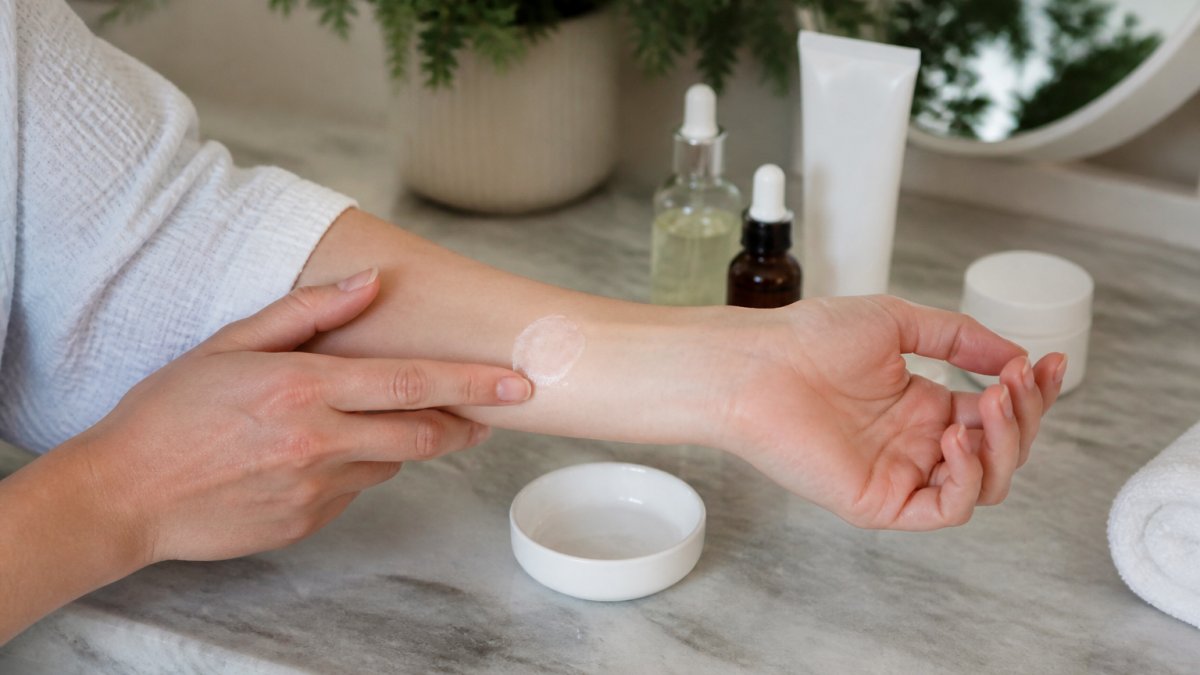
Here is the method we recommend:
- Clean a small area on your inner forearm or behind your ear.
- Apply a coin-sized amount of the product and let it dry.
- Leave it undisturbed for 24 hours without washing the area.
- Check for redness, itching, burning, or small bumps.
- If clear, repeat for 2 to 3 more days, since allergies can take time to surface.
- If clear after 4 days, introduce the product to your face, one new item at a time.
| Reaction Type | When It Appears | What It Means | Next Step |
|---|---|---|---|
| Irritation | Minutes to hours | Barrier stress, not allergy | Discontinue, simplify routine |
| Allergy | 24-72 hours | Immune response | Stop use, see a dermatologist |
| Sensitivity flare | Gradual, over days | Compromised barrier | Pause actives, focus on hydration |
| No reaction | None | Product tolerated | Introduce gradually, one at a time |
Skincare Ingredients for Sensitive Skin: What to Look For Instead
The flip side of avoidance is substitution. Rather than memorizing an endless list of things to avoid, build your routine around ingredients that support the barrier.
Look for prebiotics, which support the skin's microbiome and its natural defenses. Hyaluronic acid draws water into the skin without irritation. Shea butter, cocoa butter, and argan oil seal in moisture and calm dryness. Aloe juice soothes redness. Betaine cleanses gently without stripping.
At Regnal Radiance, our formulas are built around exactly this logic. The National Eczema Association's ingredient guidance recommends fragrance-free, dye-free products with short ingredient lists for reactive skin, and that principle shapes everything we make.
Building a Simple, Gentle Routine with Fewer Steps
More steps mean more chances for a reaction. A sensitive-skin routine needs three things: a gentle cleanse, barrier support, and moisture.
- Cleanse: Our Gentle Cleansing Milk uses shea butter and argan oil to remove makeup without stripping.
- Treat: The Bioactive Prebiotics Jelly Serum strengthens the protective barrier and soothes redness.
- Moisturize: The Sensitive Skin Body Cream locks in moisture with aloe juice, shea butter, and cocoa butter, and it is gentle enough for both face and body.
- Refresh: The Microbiome Prebiotics Face Mist delivers hydration and supports the microbiome without any sticky residue.
Reading Ingredient Labels: Synonyms and Hidden Names to Know
Labels are written in INCI names, which are standardized but not always recognizable.


Fragrance synonyms. The word parfum or fragrance can represent dozens of undisclosed compounds.
Formaldehyde releasers. These hide behind names that do not sound like formaldehyde: DMDM hydantoin, diazolidinyl urea, imidazolidinyl urea, quaternium-15, bronopol, and sodium hydroxymethylglycinate.
Sulfate synonyms. Sodium lauryl sulfate (SLS), sodium laureth sulfate (SLES), ammonium lauryl sulfate (ALS), and ammonium laureth sulfate (ALES) are the ones to watch.
"Unscented" vs. "fragrance-free." "Unscented" usually means a masking fragrance was added to neutralize the smell of raw ingredients.
How to build your personal avoid list. Keep a running note on your phone with two columns: the ingredient name you reacted to, and every synonym it appears under.
Conclusion: Making Informed Choices for Reactive Skin
Individual variation is real. An ingredient that irritates one person may be perfectly fine for another, which is why trigger tracking matters more than any universal "avoid" list. Keep a simple note of what you used and how your skin responded, and patterns will emerge within a few weeks.
When your barrier is compromised, the fix is not another active. It is fewer products, gentler formulas, and consistent hydration. That is what we build at Regnal Radiance: clean formulas with no unnecessary additives, designed to restore, protect, and let your skin glow on its own terms.
Rebuilding a routine after a reaction is frustrating, and guessing which product caused it makes it worse. Start with our Sensitive Skin Body Cream and Bioactive Prebiotics Jelly Serum, and give your barrier the support it needs to settle.
Frequently Asked Questions
What are the most common skincare ingredients that trigger sensitive skin?
Fragrance (parfum), sulfates like sodium lauryl sulfate, drying alcohols, preservatives such as methylisothiazolinone, essential oils, and exfoliating acids are the most frequent culprits. Nickel and other metals in cosmetics can also cause contact dermatitis. If your skin stings, burns, or turns red after applying a product, check the label for these ingredients to identify the trigger.
Are fragrance-free and unscented products the same for sensitive skin?
No. Unscented products may contain masking fragrances to hide the natural scent of other ingredients, while fragrance-free products contain no added fragrance at all. For sensitive skin, fragrance-free is the safer choice. Check labels for terms like parfum, aroma, and essential oils, which can irritate reactive skin even when the product claims to be unscented.
Can natural ingredients still cause irritation for sensitive skin?
Yes. Natural does not mean non-irritating. Essential oils like lavender and citrus, botanical extracts, and even lanolin can trigger allergic reactions or irritation in sensitive skin. Always patch test any new product, whether it is marketed as natural or synthetic, and introduce one product at a time to track which ingredients your skin tolerates.
How do I build a safe skincare routine if I have reactive skin?
Start with a gentle, soap-free cleanser, a fragrance-free moisturizer, and a mineral sunscreen. Introduce one new product at a time, patch testing on your inner forearm for 24 to 48 hours before applying to your face. Avoid exfoliating acids and strong actives until your barrier feels stable. A simple three-step routine often works better than a complex one for reactive skin.
How can I tell if a product will cause a reaction on my sensitive skin?
Patch testing is the most reliable way. Apply a small amount behind your ear or on your inner forearm, cover it with a bandage, and wait 24 to 48 hours. If you see redness, itching, burning, or swelling, do not use the product. For leave-on products like serums and moisturizers, test for 48 hours; for rinse-off products, 24 hours is usually enough.