
Table of Contents
- What Clean Beauty Actually Means in 2026
- Clean Beauty Ingredients to Avoid and Why They Matter
- Clean Beauty vs Conventional Beauty: The Real Differences
- Why Clean Beauty Is Better for Sensitive Skin
- How to Choose Clean Beauty Products That Actually Work
- Clean Beauty Trends Shaping 2026
- Why Clean Beauty Is Better for Your Long-Term Skin Health
- Frequently Asked Questions
Last Updated: October 15, 2026
What Clean Beauty Actually Means in 2026
Clean beauty is a category of skincare and cosmetics formulated without synthetic additives, harsh chemicals, or unnecessary irritants that can compromise skin health or environmental sustainability. The definition has evolved significantly since the term first gained traction, it's no longer just about avoiding parabens and sulfates. Today, clean beauty encompasses ingredient transparency, sustainable sourcing, ethical production, and formulations designed to work with your skin's natural biology rather than against it.
At Regnal Radiance, we understand that clean beauty isn't a marketing trend, it's a fundamental shift in how consumers approach personal care. The movement reflects a growing awareness that what you put on your skin matters as much as what you put in your body. In 2026, clean beauty means choosing products backed by transparent ingredient sourcing, formulations that respect your skin's microbiome, and packaging that minimizes environmental impact.
The core principle is straightforward: clean beauty products exclude known irritants and focus on ingredient efficacy. This doesn't mean "natural is always better", some synthetic ingredients are safer and more effective than certain botanical extracts. Instead, clean beauty prioritizes informed ingredient selection, where every component serves a purpose and nothing is included simply because it's cheap or traditional.
Clean Beauty Ingredients to Avoid and Why They Matter
Certain ingredients have become synonymous with "unclean" beauty, though understanding why they're avoided matters more than memorizing a blacklist. Parabens, sulfates, synthetic dyes, and phthalates are the most commonly eliminated, but the reasoning behind each exclusion varies.
Parabens are preservatives that extend shelf life. They're effective at preventing bacterial growth, but some research suggests they may disrupt endocrine function at high concentrations, though safety agencies maintain they're safe in cosmetic formulations. Clean beauty brands typically substitute with alternative preservative systems, like natural preservative blends or fermentation-based options.
Sulfates are cleansing agents that create lather and remove oil. Sodium lauryl sulfate and sodium laureth sulfate are harsh enough to strip the skin barrier, leaving it dry and irritated, particularly problematic for sensitive skin (pubmed.ncbi.nlm.nih.gov). Clean beauty formulas replace sulfates with gentler surfactants derived from coconut or other plant sources.
Synthetic dyes and fragrance compounds can trigger reactions in sensitive skin. Many conventional beauty products use synthetic colorants and fragrance molecules that are inexpensive but potentially irritating.
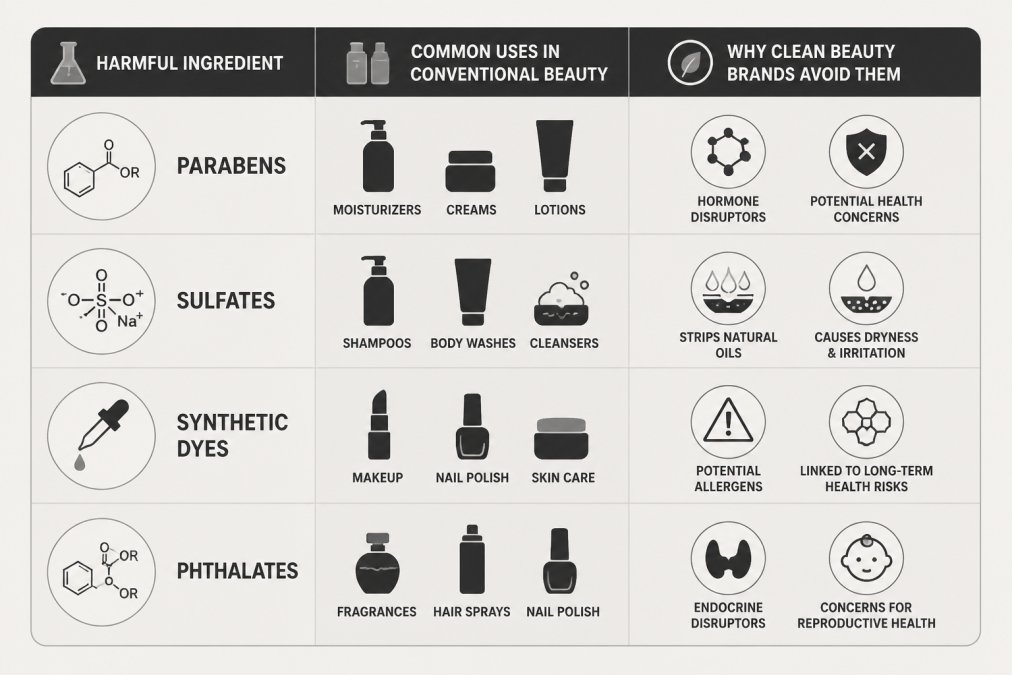
Phthalates are plasticizers used in fragrances to help scent linger longer. They're endocrine disruptors linked to reproductive health concerns. Clean beauty brands either disclose phthalate-free fragrance or eliminate synthetic fragrance altogether.
Clean Beauty vs Conventional Beauty: The Real Differences
The distinction between clean beauty and conventional beauty isn't about one being universally "better", it's about different formulation philosophies and priorities. Understanding the trade-offs helps you choose what actually serves your skin.
Conventional beauty products prioritize stability, shelf life, and cost efficiency. They use proven synthetic preservatives, stabilizers, and fragrance compounds because they're reliable and inexpensive. A conventional moisturizer might contain parabens, mineral oil, and synthetic fragrance, all ingredients that work effectively for most people and cost less to produce.
Clean beauty prioritizes ingredient transparency, skin compatibility, and environmental responsibility. Clean formulas typically cost more because they use harder-to-source plant extracts, more expensive preservative systems, and sustainable packaging. They're formulated to support your skin's natural balance rather than mask problems with heavy coverage or fragrance. For sensitive skin, clean beauty often performs better because it eliminates common irritants.
The performance gap is real but context-dependent. A conventional foundation with silicones and synthetic polymers provides longer wear and fuller coverage than a clean alternative, but it may also clog pores and irritate reactive skin. A clean serum with prebiotics and hyaluronic acid hydrates effectively without the heaviness of conventional serums packed with silicones.
Regnal Radiance bridges this gap by refusing to sacrifice efficacy for clean credentials. Our Bioactive Prebiotics Jelly Serum delivers visible results through prebiotic technology and hyaluronic acid, without relying on silicones or synthetic polymers. The lightweight texture absorbs instantly and strengthens your skin barrier, a clean formulation that performs like a premium conventional product.

Why Clean Beauty Is Better for Sensitive Skin
Sensitive skin reacts to irritants, allergens, and barrier-disrupting ingredients. Clean beauty formulations address this directly by eliminating the most common culprits: sulfates, parabens, synthetic fragrances, and harsh surfactants. For people with reactive skin, clean beauty isn't optional, it's the only category that reliably avoids triggering inflammation.
Conventional beauty products often contain multiple irritants in a single formula. A conventional cleanser might combine sulfates (which strip the barrier), parabens (which can trigger immune responses), and synthetic fragrance (which may cause contact dermatitis). Even if each ingredient is "safe" in isolation, the combination overwhelms sensitive skin. Clean beauty simplifies the formula, removing redundant irritants and focusing on soothing, barrier-supporting ingredients.
The microbiome connection is critical. Your skin hosts beneficial bacteria that protect against pathogens and maintain barrier health (pubmed.ncbi.nlm.nih.gov). Harsh cleansing agents and synthetic preservatives disrupt this ecosystem. Clean beauty formulations, particularly those with prebiotic ingredients, actively support your microbiome rather than destroying it. Regnal Radiance's Sensitive Scalp Shampoo uses natural, COSMOS-certified ingredients and betaine to cleanse without stripping, making it safe for dry and easily irritated scalps. The formula soothes dryness while maintaining the scalp's natural balance.

Sensitive skin also benefits from shorter ingredient lists. Fewer components mean fewer potential allergens and irritants. A clean moisturizer with five intentional ingredients is far less likely to trigger a reaction than a conventional formula with twenty-five ingredients, many of which serve no skin-health purpose.
How to Choose Clean Beauty Products That Actually Work
Choosing clean beauty requires moving beyond marketing claims and evaluating actual ingredients and formulation philosophy. Here's how to distinguish genuine clean beauty from greenwashing.
Read the ingredient list first. The ingredient list, listed in descending order by concentration, tells you what's actually in the product. Look for recognizable components: plant extracts, oils, hyaluronic acid, glycerin, prebiotics.
Verify certifications. Legitimate clean beauty brands pursue third-party certifications like COSMOS Natural, Ecocert, or Leaping Bunny. These certifications require independent audits of ingredients, sourcing, and production practices. A product claiming to be "clean" without certification is relying on your trust alone.
Check for transparency claims. Genuine clean beauty brands publish detailed information about ingredient sourcing, production methods, and why specific ingredients were chosen. Vague marketing language like "naturally derived" or "clean formula" without supporting details is a red flag.
Test on a small area first. Even clean products can trigger reactions in highly sensitive skin. Always patch-test new products on a small area (inner arm or behind the ear) for 24-48 hours before full application. This catches potential sensitivities before they affect your face or scalp.
Match the formula to your skin type. Clean beauty encompasses many formulations. Regnal Radiance's Microbiome Prebiotics Face Mist works for all skin types because it balances hydration with barrier support, the prebiotic formula strengthens your skin's natural defenses regardless of your baseline skin condition.

Evaluate results over marketing. Clean beauty works gradually by supporting your skin's health, not masking problems.
Clean Beauty Trends Shaping 2026
The clean beauty landscape in 2026 reflects a maturation of the category. Early trends focused on exclusion (what to avoid), but 2026 emphasizes inclusion (what actively benefits your skin) and sustainability.
Microbiome-focused formulations dominate the market. Brands now understand that healthy skin depends on a balanced bacterial ecosystem. Products with prebiotics, postbiotics, and microbiome-supporting ingredients are no longer niche, they're mainstream.
Refillable and low-waste packaging has moved from novelty to expectation. Consumers increasingly reject single-use packaging, driving brands toward refill systems, concentrated formulas, and compostable materials. This trend reflects broader environmental consciousness and the recognition that packaging waste rivals ingredient concerns in environmental impact.
Personalized beauty recommendations powered by AI and skin analysis technology are reshaping how consumers discover products. Rather than generic product categories, 2026 offers tailored recommendations based on individual skin type, concerns, and preferences. This precision reduces waste from purchasing wrong products and ensures better outcomes.
Regenerative ingredient sourcing extends beyond "sustainable" to actively beneficial farming practices. Brands partner with suppliers using regenerative agriculture, methods that improve soil health, increase biodiversity, and sequester carbon. These ingredients cost more but reflect genuine environmental commitment rather than marketing positioning.
Multifunctional, skincare-infused makeup continues gaining traction. Rather than separating skincare and cosmetics, 2026 products blur the line. Foundations with hyaluronic acid and peptides, concealers with niacinamide, and mascaras with conditioning oils serve dual purposes, reducing the number of products needed and simplifying routines.
Why Clean Beauty Is Better for Your Long-Term Skin Health
Short-term results matter, but the real advantage of clean beauty emerges over months and years. Conventional products may deliver faster visible results through heavy coverage or temporary plumping, but they often compromise skin health in the process.
Your skin barrier, the outermost layer of dead skin cells and lipids, is your first defense against environmental damage and irritation. Harsh conventional products strip this barrier, leaving skin dry, irritated, and vulnerable to accelerated aging.
Microbiome health directly impacts skin appearance. When you use products that kill beneficial bacteria, your skin's natural defenses weaken. This allows pathogenic bacteria to proliferate, triggering inflammation, acne, and sensitivity.
Ingredient accumulation is a hidden problem with conventional products. Many synthetic compounds don't fully rinse away; they accumulate in your skin over time. This buildup can trigger delayed reactions, dull your complexion, and interfere with your skin's natural processes.
Anti-aging benefits are more pronounced with clean beauty over time. Rather than relying on temporary plumping or light-reflecting particles, clean products support skin health through hydration, barrier support, and cellular protection.
The psychological benefit matters too. Using products aligned with your values, clean ingredients, ethical sourcing, minimal waste, creates a mindful skincare ritual. This intentionality encourages consistency, which is the single greatest predictor of skincare success.
Choosing clean beauty in 2026 means prioritizing your skin's long-term health over quick fixes. The evidence is clear: products formulated without harsh irritants, with transparent ingredients, and with genuine efficacy deliver better results over time, particularly for sensitive skin.
Frequently Asked Questions
What does clean beauty mean in 2026?
Clean beauty in 2026 refers to skincare and makeup formulated without synthetic additives, harsh chemicals, parabens, sulfates, and unnecessary irritants. It emphasizes ingredient transparency, sustainable sourcing of plant-based and natural ingredients, and ethical production. Clean beauty products are designed to work with your skin's natural balance rather than against it, making them especially suitable for sensitive skin types seeking gentler alternatives without compromising efficacy.
Is clean beauty actually better for sensitive skin?
Yes, clean beauty formulations are generally better for sensitive skin because they exclude common irritants like sulfates, synthetic fragrances, and harsh preservatives that trigger inflammation and redness. Products formulated with prebiotics and natural ingredients like aloe juice support your skin's microbiome and barrier function, reducing reactivity. However, not all clean products suit every sensitive skin type, always check the ingredient list and patch-test first, as sensitivity varies individually.
How can I tell if a beauty product is truly clean?
Look for third-party certifications like COSMOS Natural, which verify natural and eco-friendly ingredients. Check the ingredient list for transparency, clean brands list what's included and why. Avoid vague claims like 'natural' without specifics. Research the sourcing practices: regenerative and upcycled ingredients indicate genuine sustainability. Read reviews from people with similar skin concerns. Regnal Radiance's products, for example, carry certifications and clearly state their active ingredients like prebiotics and hyaluronic acid, making it easy to verify what you're using.
What's the main difference between clean beauty and conventional beauty?
Conventional beauty often relies on synthetic preservatives, stabilizers, and fragrance compounds that maximize shelf life and lower costs but can irritate sensitive skin. Clean beauty prioritizes ingredient safety, transparency, and minimal additives, using plant-based alternatives and shorter ingredient lists. While conventional products may offer certain performance benefits, clean beauty achieves results through thoughtful formulation that works with your skin's natural ecosystem rather than relying on harsh chemicals to force results.