
Last Updated: November 12, 2026
Quick Summary
To choose a microbiome-friendly skincare set, read the full ingredient list for named prebiotics, postbiotics, or barrier lipids, then check that the cleanser, treatment, and moisturizer were formulated to work together without duplicating harsh actives. Patch test each product and introduce them one at a time, a week apart.
- Microbiome-friendly is marketing language, not a regulated category, so ignore the front of the box and read the back.
- Prebiotics feed beneficial species already on your skin and are the most reliable bet because they don't depend on live cultures.
- Live cultures are difficult to keep stable in water-based formulas, so many probiotic products contain ferments or postbiotics instead.
- Patch test on the inner forearm twice daily for three days before committing to a set.
- Space new products a week apart so you can trace any reaction to its source.
Table of Contents
- Why Microbiome-Friendly Skincare Sets Are Worth the Switch
- What Microbiome-Friendly Really Means on a Label
- Microbiome-Friendly Skincare Ingredients to Look For
- Probiotic Skin Care vs Microbiome-Friendly: What's the Difference?
- Build a Skin Barrier Skincare Routine Around Your Set
- A Step-by-Step Framework for Choosing Your Set
- Match the Set to Your Skin Type and Concerns
- Start Your Microbiome-Friendly Set with Regnal Radiance
- Frequently Asked Questions
Why Microbiome-Friendly Skincare Sets Are Worth the Switch
Most sensitive-skin routines fail for a boring reason: they were built one product at a time, and nobody checked whether the products worked together. Learning how to choose a microbiome friendly skincare set means buying with your skin's bacterial community in mind, not just your skin type. Barrier trouble rarely comes from a single bad product. It often comes from a stack of small irritations.
The skin microbiome is the community of bacteria, fungi, and other microorganisms living on your skin's surface. When that community stays diverse and balanced, the skin barrier tends to hold moisture better and react less.
Here's the tension worth understanding: a product labeled "gentle" can still disrupt that balance if you layer four of them. A coordinated set removes the guesswork, because the formulas are designed to sit together rather than fight.
Below, we'll walk through a seven-step framework for picking a set, reading labels honestly, and introducing products without triggering a reaction.
What Microbiome-Friendly Really Means on a Label
"Microbiome-friendly" is marketing language, not a regulated category. No authority certifies it, so the label alone tells you very little about what's inside the bottle.
A 2025 review in PubMed Central on microbiome-based skin interventions describes these products as ones that either introduce beneficial microbes or feed the species already living on your skin. That's the useful definition. The label is not.
This is the first place most shoppers get burned. A product marketed as "probiotic" may contain ferments, lysates, or postbiotics rather than live cultures, as CKYN Shop's breakdown of live versus postbiotic skincare points out. None of those are automatically bad. They're just not the same thing, and you deserve to know which one you're buying.
Practical rule: ignore the front of the box. Read the back.
Microbiome-Friendly Skincare Ingredients to Look For
Start with prebiotics. These are the ingredients that feed beneficial species already on your skin, and they're the most reliable bet in this category because they don't depend on live cultures surviving in a jar.
Look for:
- Prebiotic complexes listed as active ingredients, not buried at the bottom
- Hyaluronic acid for hydration and moisture retention
- Ceramides to reinforce barrier function
- Panthenol and bisabolol to calm redness and irritation
- Aloe juice and betaine for soothing, lightweight moisture
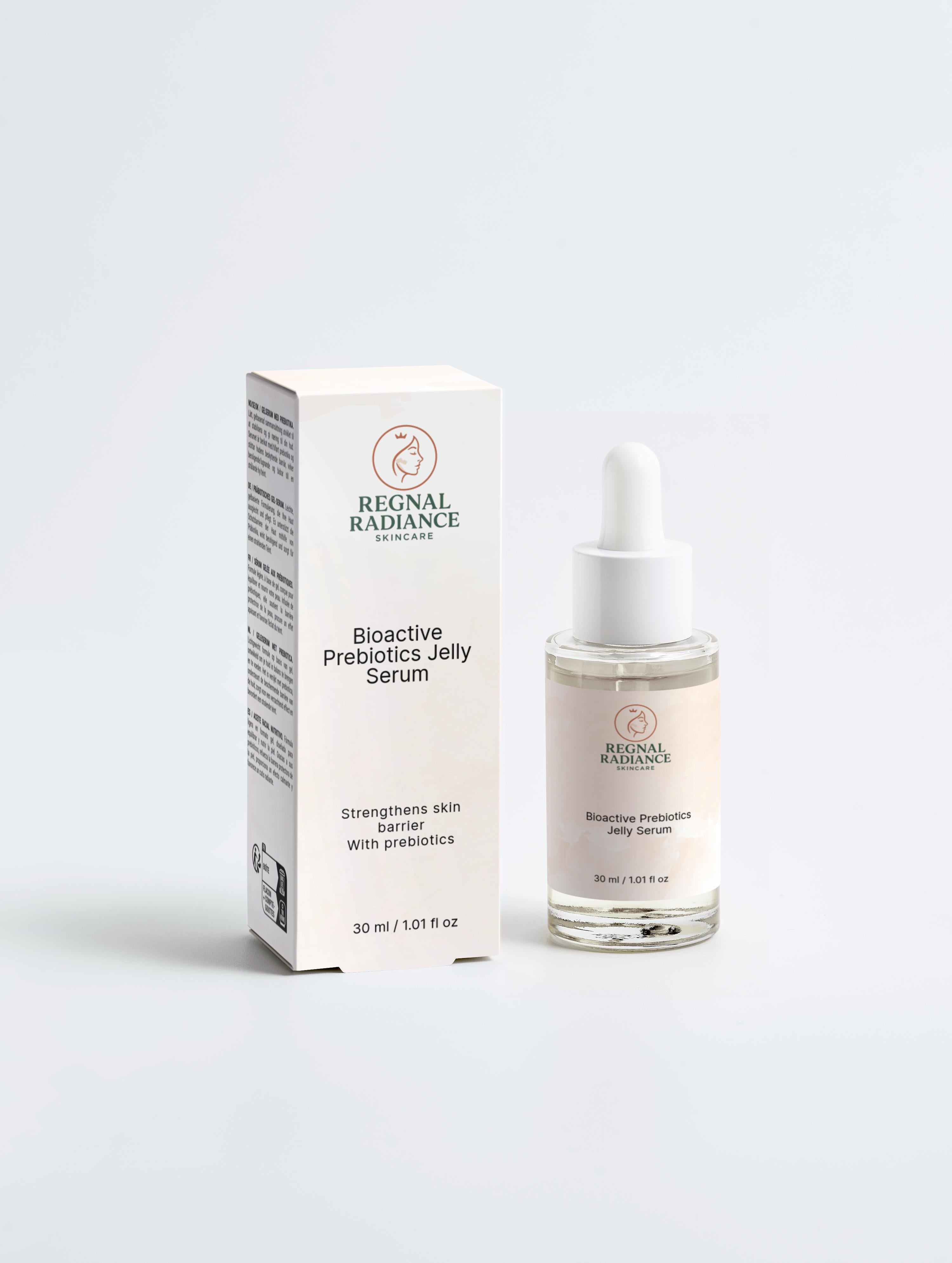
Our Bioactive Prebiotics Jelly Serum is built around exactly this approach: a prebiotic formula with hyaluronic acid in a lightweight jelly texture that absorbs without residue.
Then there's the other column. Watch for high concentrations of harsh alcohols near the top of an ingredient list, and be cautious with strong exfoliating acids used daily. Neither is evil. Both can chip away at microbial stability if you stack them.
A 2023 protocol published in PubMed Central on assessing microbiota-friendly environments proposes a practical way to judge whether a routine supports microbial balance rather than just claiming to. The takeaway for shoppers: judge the whole routine, not one hero product.
Probiotic Skin Care vs Microbiome-Friendly: What's the Difference?
Probiotic skin care puts the organisms in the bottle. Microbiome-friendly skincare supports the organisms already on your face.
That distinction matters more than most labels admit. Live cultures can be difficult to keep stable in a water-based formula, which is one reason many "probiotic" products contain ferments or postbiotics instead.
Neither approach is superior on principle. But if you have sensitive or reactive skin, prebiotic-led formulas are a common starting point, because you're supporting balance rather than introducing a new variable.
If you want the longer explanation, our article on clean beauty prebiotic serum benefits walks through what prebiotics actually do at the barrier level.
Build a Skin Barrier Skincare Routine Around Your Set
A skin barrier skincare routine is short by design. Cleanser, serum, moisturizer, SPF in the morning. That's the skeleton, and a good set fills it without adding steps you'll abandon by week two.
Here's how the pieces fit:
- Cleanse with a mild cleanser that doesn't leave skin tight
- Treat with a prebiotic serum pressed gently into damp skin
- Moisturize to lock in hydration and support barrier function
- Protect with SPF during the day
- Refresh with a mist whenever skin feels tight or dehydrated
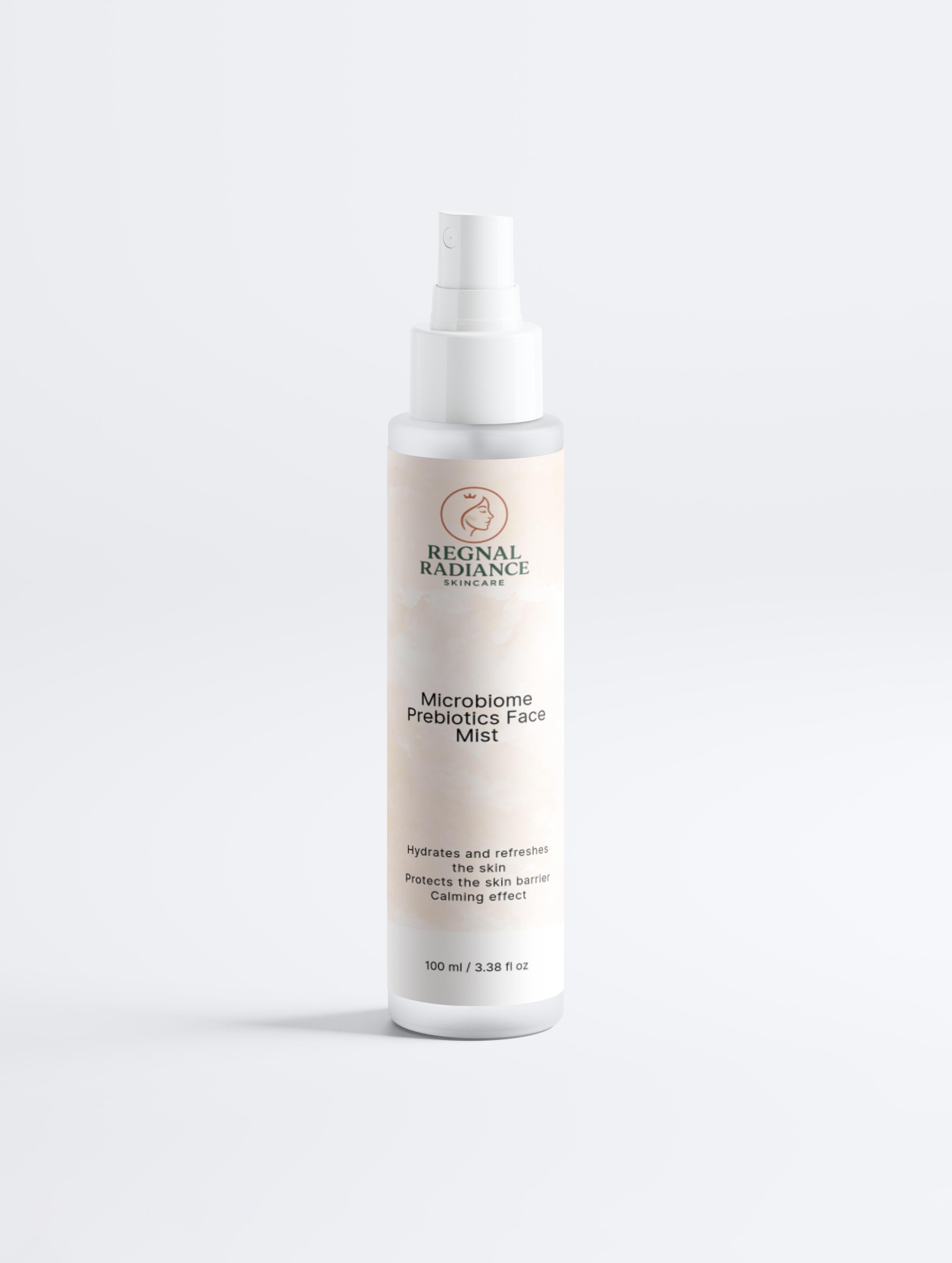
That fifth step is where our Microbiome Prebiotics Face Mist fits. It's a weightless prebiotic and hyaluronic acid mist you can use after skincare, midday, or over makeup.
Watch out: adding five new products in one week is the fastest route to a reaction you can't trace. Introduce one at a time and give each a week.
A Step-by-Step Framework for Choosing Your Set
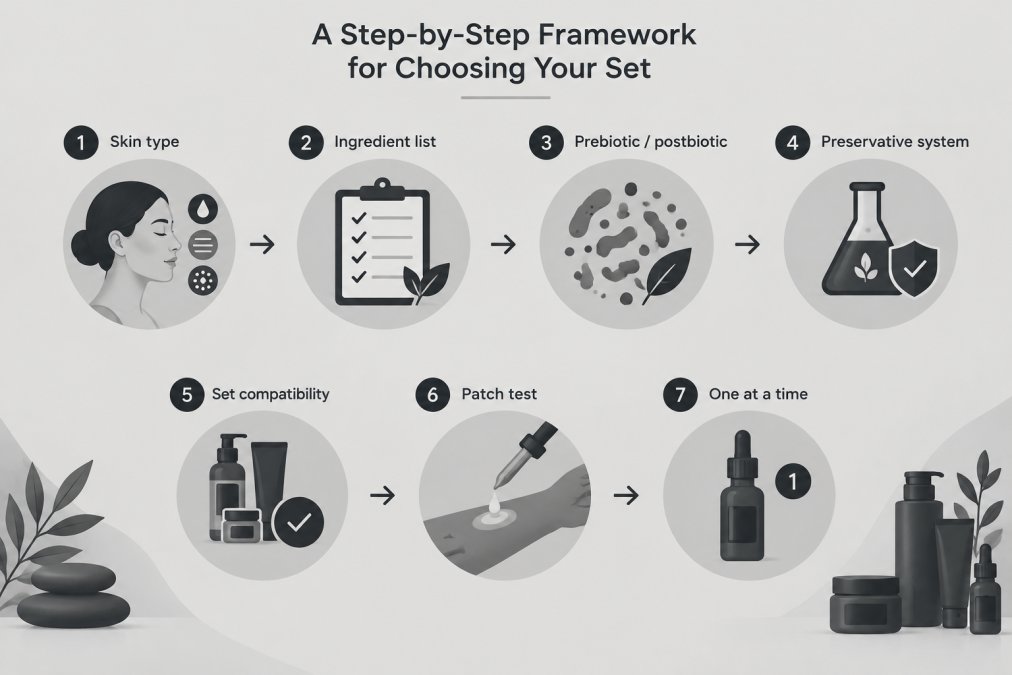
A set is different: you are judging whether a cleanser, a treatment, and a moisturizer were formulated to coexist, not whether each one wins its own category. Use this seven-step framework in order.
Step 1: Identify your skin type and top concern. Write down two things: your baseline type (dry, oily, combination, sensitive) and your single main concern (dehydration, redness, barrier damage, breakouts). A set that claims to do everything usually does nothing well. If you cannot name one concern, you are not ready to buy, you are ready to observe your skin for a week.
Step 2: Read the full ingredient list, not the front of the box. Confirm that prebiotics, postbiotics, or barrier lipids appear as named ingredients rather than as marketing copy.
Step 3: Decode what "probiotic" actually means here. Live cultures, ferments, lysates, and postbiotics are all labeled the same way.
Step 4: Review the preservative system. A well-preserved formula protects you from contamination, and a set that sits in a humid bathroom for months needs that protection. Self-preserving systems can suit some skin types, but stability still matters.
Step 5: Assess set compatibility, the step most shoppers skip. This is where a set earns its price. Check three things: (a) Do the cleanser, treatment, and moisturizer share actives rather than duplicate them?
Step 6: Patch test before you commit. Apply a small amount to the inner forearm twice daily for three days. This will not catch every facial reaction, but it flags obvious sensitizers before they reach your face.
Step 7: Introduce one product at a time. Space new products a week apart so you can trace any reaction to its source.
| Step | What You Check | Time Needed | Red Flag |
|---|---|---|---|
| 1 | Skin type and main concern | 5 min | No clear concern |
| 2 | Named prebiotic or postbiotic actives | 5 min | Buzzwords only |
| 3 | Probiotic claim type | 3 min | Vague "probiotic" label |
| 4 | Preservative system | 3 min | No preservative listed |
| 5 | Set compatibility | 5 min | Duplicate harsh actives |
| 6 | Patch test | 3 days | Immediate stinging |
| 7 | One-at-a-time introduction | 1 week each | Multiple reactions at once |
A 2023 protocol published in PubMed Central on assessing microbiota-friendly environments proposes judging a routine by its cumulative effect on microbial balance rather than by any single hero product.
Match the Set to Your Skin Type and Concerns
A microbiome-friendly set is not one-size-fits-all. The same prebiotic serum that calms dry, reactive skin can feel occlusive on oily skin, and a rich cream that rescues a damaged barrier can trigger breakouts on acne-prone skin.
Dry skin. Prioritize lipids and humectants that hold water in the upper layers: ceramides, multi-molecular-weight hyaluronic acid, glycerin, betaine, and soothing agents such as bisabolol. Our Moisturizing Day Cream uses multi-molecular-weight hyaluronic acid, bisabolol, and rowanberry extract to hydrate at several depths and calm comfort.
Oily and combination skin. Look for lightweight textures, gels, jellies, mists, and avoid heavy occlusives in the treatment step. A jelly serum plus a separate moisturizer lets you treat an oily T-zone differently from dry cheeks, which a single all-in-one product cannot do.
Acne-prone skin. Barrier support and acne treatment pull in opposite directions, so sequence matters more than product count. Keep the set simple: a mild cleanser, a prebiotic or postbiotic treatment, and a non-occlusive moisturizer.
Sensitive and reactive skin. Fewer actives, more barrier support. Start with one prebiotic serum and build outward. If your skin reacts even to gentle formulas, read why gentle skincare irritates sensitive skin before you buy anything new.
Eczema-prone skin. This is a medical condition, not a cosmetic preference. Microbiome-friendly formulas can sit alongside a dermatologist's plan, but they do not replace prescription treatment during a flare. Patch test carefully, favor fragrance-free formulas, and introduce one product at a time.
When to seek professional advice. See a dermatologist if you have persistent redness, cracking, weeping, or pain; if a reaction does not settle within a few days of stopping the product; or if you are treating eczema, rosacea, or perioral dermatitis.
A common pattern is that shoppers buy for their skin type but forget their skin condition, the two are not the same, and the condition should drive the decision when they conflict.
Start Your Microbiome-Friendly Set with Regnal Radiance
Choosing well comes down to three habits: read the ingredient list, buy products designed to work together, and introduce them slowly. Everything else is detail.
Our Glow & Go Face Bundle puts the framework into practice as a four-piece set: the prebiotic jelly serum, the prebiotic face mist, a daily moisturizer with aloe juice, betaine, and hyaluronic acid, and caffeine plus vitamin C hydrogel eye patches. It's designed for people who want a complete routine without assembling one from scratch.
If you've been let down by products labeled clean and gentle before, start with the patch test and one product. That's how you find out whether a formula suits your skin, rather than guessing from the front of a box.
Your skin doesn't need a ten-step routine. It needs products that support its barrier and don't undo each other. Regnal Radiance builds prebiotic-led face care with clean ingredients, lightweight textures that absorb without residue, and formulas gentle enough for sensitive skin. Get started with Regnal Radiance and build a routine your skin can actually settle into.
Frequently Asked Questions
How do I choose a microbiome-friendly skincare set?
Start with your skin type and sensitivity, then read the full ingredient list rather than the front label. Look for prebiotics, postbiotics, ceramides, and gentle humectants like hyaluronic acid, and check that the set shares one preservative system so the products work together. Introduce one product at a time over two weeks and patch test first. The Glow & Go Face Bundle includes the serum, mist, cream, and eye patches in one set.
Are probiotic skincare products the same as microbiome-friendly skincare?
No. Microbiome-friendly describes a formulation approach that supports the skin's existing microbial balance, often through prebiotics or postbiotics. Probiotic skin care is a narrower label, and products marketed as probiotic may contain ferments, lysates, or postbiotics rather than live cultures. Check the ingredient list to see what the product actually contains instead of relying on the front-of-pack wording. A prebiotic serum, like the Bioactive Prebiotics Jelly Serum, feeds beneficial species rather than adding live bacteria.
Which ingredients should I look for in microbiome-friendly skincare?
Look for prebiotics that feed beneficial species, postbiotics and ferments, ceramides, hyaluronic acid, glycerin, betaine, aloe, bisabolol, and panthenol. These support barrier function and moisture retention without stripping skin. Avoid or limit harsh alcohols, strong fragrance, and high concentrations of exfoliating acids in a daily set. A practical check is whether the first five ingredients include a humectant and a barrier-supporting lipid, and whether the preservative system is listed clearly.
Can microbiome-friendly skincare help support the skin barrier?
Yes, when the formula includes barrier-supporting ingredients and avoids harsh surfactants. Prebiotics and postbiotics help maintain microbial balance, while ceramides, hyaluronic acid, and bisabolol support barrier function and calm redness. Microbiome-based interventions are generally described as introducing beneficial microbes or feeding existing species. Results depend on consistent use.
