
Quick Summary
Caffeine and vitamin C eye patches are hydrogel masks marketed to reduce puffiness and dark circles, but their effects are temporary refreshes rather than lasting change. Caffeine has the most direct clinical attention, though the evidence is narrower than marketing suggests. Choose patches by fit, ingredients, hydration, and value per use.
- Caffeine is positioned to help reduce puffiness, while vitamin C is positioned to help even the look of dark circles.
- A caffeine eye pad study used 3% w/w caffeine, but the available summary does not establish a clear numerical outcome.
- Vitamin C brightening generally takes consistent use over weeks, not a single patch session.
- Compare patches on fit, comfort, ingredient transparency, hydration support, and value per use.
- Apply patches after cleansing and before eye cream, moisturizer, and sunscreen, and wear them about 15 minutes.
Table of Contents
- What Caffeine and Vitamin C Eye Patches Are Designed to Do
- Caffeine Eye Patches for Dark Circles: What the Evidence Shows
- Vitamin C Eye Patches for Dark Circles: Realistic Expectations
- Choosing the Best Eye Patches for Bags Under Eyes
- What Dermatologists Recommend for Under-Eye Care
- How Long to Wear Them and Where They Fit in Your Routine
- Trying Caffeine and Vitamin C Patches in Your Own Routine
- Frequently Asked Questions
What Caffeine and Vitamin C Eye Patches Are Designed to Do
Caffeine and vitamin C eye patches are hydrogel or gel-style masks that sit under the eyes. Each ingredient is marketed for a different job. Caffeine is positioned to help reduce the appearance of puffiness, while vitamin C is positioned to help even the look of dark circles and dullness.
The format matters as much as the actives. A hydrogel patch holds a serum against the skin for a set period, which is why brands market it as a quick treatment.
Caffeine Eye Patches for Dark Circles: What the Evidence Shows
Caffeine is the ingredient with the most direct clinical attention in this category, but the evidence is narrower than the marketing suggests.
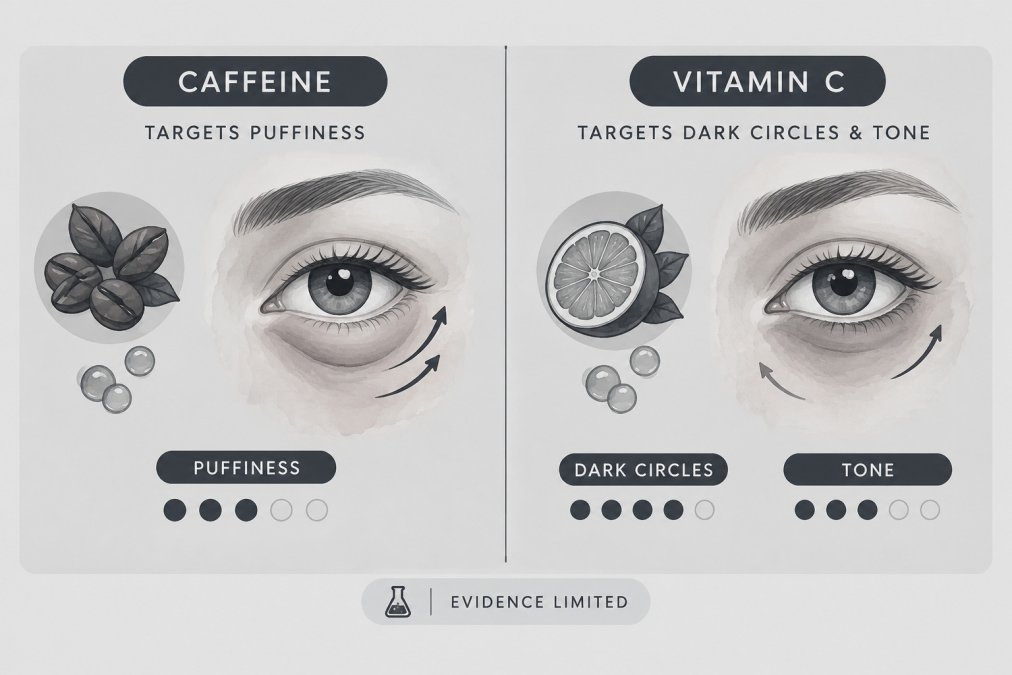
What that means in practice: caffeine has a reasonable rationale for reducing puffiness, and some studies have looked at it, but dark circles have many causes, including pigment, thin skin and shadowing. A patch is unlikely to address all of them.
Vitamin C Eye Patches for Dark Circles: Realistic Expectations
Vitamin C is valued for its role in brightening and evening the look of skin tone.

Two practical points matter here. First, the form of vitamin C changes how stable and gentle it is, and the listing for the Regnal Radiance patch names sodium ascorbyl phosphate as its vitamin C ingredient. Second, brightening generally takes consistent use over weeks, not a single sitting.
Choosing the Best Eye Patches for Bags Under Eyes
Shoppers searching for the best eye patches for bags under eyes usually want one of two things: a quick de-puffing effect before a morning appointment, or a longer-term change in how the under-eye area looks. Caffeine-led patches tend to fit the first goal. Patches that combine caffeine and vitamin C try to address puffiness and tone in one step. The problem is that most roundups rank products by brand familiarity rather than by the criteria that actually predict whether a patch will work for you.
A Five-Point Selection Rubric
Use the same five checks on every product you compare, and write down a score for each. This is the step most product listings skip, and it is where the real differences between patches show up.
- Fit and adhesion. A patch that slides or lifts at the inner corner will not stay in contact with the skin for the full wear time. Look for contoured or winged shapes if you have a flatter under-eye area, and check whether the brand describes the patch as staying put during movement.
- Comfort and wear time. Cooling hydrogel feels pleasant for 10 to 15 minutes, but a patch that stings or tingles on contact is a warning sign, not a benefit. Note whether the brand gives a wear window and whether the serum leaves a tacky residue.
- Ingredient transparency. Both caffeine and vitamin C should appear on the ingredient list, not only on the front label. Check where they sit in the order and whether the vitamin C form is named (for example, sodium ascorbyl phosphate versus ascorbic acid).
- Hydration support. Glycerin, panthenol, hyaluronic acid, and similar humectants determine how plump the area looks immediately after removal. A patch with actives but no humectants often feels drying.
- Value per use. Divide the pack price by the number of pairs. A box of seven pairs and a box of thirty are not comparable at the shelf-price level.
Format Trade-Offs: Hydrogel, Fiber, and Reusable
Hydrogel patches hold a serum against the skin and feel cooling, which is why they dominate the caffeine-and-vitamin-C category. Fiber or fabric patches soaked in essence tend to be thinner and adhere differently; they can feel lighter but may dry out faster. Reusable silicone or gel patches are usually sold without actives and are meant to be paired with your own serum, so they are a different product category rather than a cheaper version of a single-use patch.
What Labels Do and Do Not Reveal
Many listings name an ingredient without disclosing how much is present. Where a clinical study reports a specific concentration, such as the 3% w/w caffeine formulation mentioned above, that is a useful benchmark, but it is not a guarantee that a different product performs the same way.
Watch out: a front label that says "vitamin C" can refer to a derivative with very different stability and gentleness than ascorbic acid, so read the ingredient list rather than the marketing name.
Comparing Value by Use, Not by Jar Price
Cost per pair is the only fair comparison across pack sizes. A larger box usually lowers the per-pair cost, but only if you will use the patches before they dry out or expire. If you plan to use a patch daily, calculate the monthly cost at your intended frequency before committing to a large box. If you plan to use them only before events, a smaller pack is usually the better value even at a higher per-pair price.
Matching the Patch to Your Goal
For morning puffiness, prioritize caffeine placement high in the ingredient list, a cooling hydrogel base, and a shape that stays flat under the eye. For tone and dullness, prioritize a named vitamin C form plus humectants, and plan for weeks of consistent use rather than a single session. For sensitive skin, prioritize short ingredient lists, no added fragrance, and a patch you can test on a small area first.
The five checks below give a repeatable way to compare patches on the same terms.
| Check | What to look for | Why it matters |
|---|---|---|
| Fit and adhesion | Contoured or winged shape | Patch stays in contact during wear |
| Comfort and wear time | Cooling feel, no sting or tingle | Stinging is a warning sign |
| Ingredient transparency | Caffeine and vitamin C both listed, vitamin C form named | Front-label claims can hide weaker actives |
| Hydration support | Glycerin, panthenol, hyaluronic acid | Determines plumpness after removal |
| Value per use | Pack price divided by number of pairs | Pack sizes are not comparable at shelf price |
What Dermatologists Recommend for Under-Eye Care
Product roundups from publications such as Women's Health's tested under-eye gel patch roundup and NBC Select's guide to under-eye patches test a range of patches, which is useful for comparing texture and wear. Read testing methodology closely, since results depend on how long each patch was worn and on the tester's skin type.
How Long to Wear Them and Where They Fit in Your Routine
The Regnal Radiance caffeine and vitamin C patches are designed for about 15 minutes of wear. Apply them to clean, dry skin, press gently, and remove once the gel has settled. Any leftover serum can be massaged into the area, and no rinsing is usually needed.
The Order That Works
In a morning routine, patches typically come after cleansing and toning and before eye cream, moisturizer, and sunscreen. The reason is contact: a patch needs to sit against bare or lightly toned skin to transfer its serum.
A practical morning sequence looks like this: cleanse, apply patches for 10 to 15 minutes while you do something else, remove, massage in leftover serum, then apply eye cream, moisturizer, and sunscreen.
Patches and Eye Cream: Use One or Both?
You can use both, but not at the same moment. Think of the patch as a short, concentrated step and the eye cream as the maintenance layer. On days you use a patch, you can often skip a separate eye cream in the morning because the patch serum already delivers humectants. In the evening, apply eye cream after the patch to seal in hydration overnight.
Sunscreen and Makeup Compatibility
Sunscreen belongs after the patch, never under it. Vitamin C in the morning pairs well with sunscreen because the two together support the look of even tone, but the sunscreen layer needs to sit on top of the serum, not beneath the patch. For makeup, wait until any tackiness has absorbed; a gripping or hydrating primer over the under-eye area can help concealer sit smoothly on top of the serum residue.
Evening Use and Timing Around Sleep
Evening use works well if you want to reduce the look of puffiness before bed or prep the area before an eye cream. Remove the patch before lying down, since a patch worn into sleep can shift and leave residue on the pillow. If you use a nighttime retinoid near the eye area, keep the patch step separate and apply the retinoid after the patch has been removed and the serum absorbed.
How Long, and How Often
Follow the brand's stated wear window, which is usually 10 to 20 minutes. Leaving a hydrogel patch on longer does not increase the effect; once the gel dries, it can start to pull moisture back from the skin.
Once you have a steady routine, you can cover the basics of the rest of your skincare with simple, low-irritation steps. Our guide to a gentle, minimal skincare approach for busy people outlines how to keep the routine short.
Trying Caffeine and Vitamin C Patches in Your Own Routine
If you decide to try them, start with one pair a day for two weeks and note how your under-eye area looks in the morning. Track puffiness, tone and comfort rather than expecting a dramatic change. If your skin responds well, you can keep them as an occasional refresh.
The Caffeine + Vitamin C Energizing Hydrogel Eye Patches from Regnal Radiance are sold in boxes of seven pairs at $23.00. Their listing describes caffeine for de-puffing, sodium ascorbyl phosphate for the look of dark circles, and panthenol and glycerin for hydration. You can [buy the caffeine and vitamin C hydrogel eye patches | regnalradiance.com/products/caffeine-vitamin-c-energizing-hydrogel-eye-patches] to test them yourself.
Whatever you choose, judge the patches by how your own skin responds, and keep your expectations on the refreshed look that these products can realistically provide.
Frequently Asked Questions
Do caffeine under eye patches really work?
Caffeine is included in many under-eye patches to help the look of puffiness, which is a temporary, cosmetic effect rather than a change to the skin itself. A study of an anti-wrinkle and dark-circle eye pad containing 3% w/w caffeine is indexed in PubMed Central, but the summary available for this review does not report a numerical outcome. Expect a refreshed appearance that fades after the patch is removed, and judge results over several uses rather than one.
Is vitamin C or caffeine better for under eyes?
Neither is better in every case, because they address different concerns. Caffeine is used to help the look of puffiness, while vitamin C is used to help brighten the look of dark circles and even tone. If your main concern is morning swelling, caffeine is the more relevant ingredient; if it is uneven tone or dullness, vitamin C may matter more. Many patches combine both, which is why the combination is popular.
How long should you leave eye patches on?
Most under-eye patches, including the Caffeine + Vitamin C Energizing Hydrogel Eye Patches from Regnal Radiance, are designed to stay on for about 15 minutes. Leaving a patch on much longer does not reliably improve results and can cause the hydrogel to dry out. After removing the patch, you can gently massage any remaining serum into the skin. Follow the instructions on your specific product.
Should you use eye patches before or after moisturizer?
Apply eye patches to clean skin after toner or serum and before your moisturizer, since the patch delivers active ingredients directly to the under-eye area. Once you remove the patch, massage any leftover serum in, then follow with a moisturizer to help lock in hydration. If you have dry skin, the extra moisture step can help. Use eye patches in your morning routine for a quick refresh, or in the evening when your eyes need extra care.
