
Last Updated: October 22, 2026
Quick Summary
Natural ingredients for hair health work by delivering bioactive compounds like polyphenols, flavonoids, fatty acids, and antioxidants that strengthen strands, stimulate the scalp, and lock in moisture. Rosemary oil has the strongest human evidence for scalp stimulation and growth, while argan and coconut oils nourish without heaviness. Results take 3-6 months of consistent use, and matching the ingredient to your specific concern, thinning, breakage, or scalp health, is key.
- Rosemary oil is the most researched natural ingredient for hair growth, increasing blood flow to scalp and follicles.
- Normal shedding is 50-100 hairs per day; full-length hairs with bulbs indicate shedding, while short fragments indicate breakage.
- Essential oils must be diluted to 1-2% concentration before use; never apply undiluted to hair or scalp.
- Hair grows roughly 1 cm per month, so visible changes from natural treatments take at least 8-12 weeks of consistent use.
- Caffeine, red-light therapy, and melatonin have the strongest evidence among natural remedies, followed by rosemary and peppermint.
Table of Contents
- Why Natural Ingredients Matter for Hair Health
- Natural Ingredients for Hair Growth and Thickness
- Natural Remedies for Hair Thinning and Breakage
- Natural Oils for Hair and Scalp Care
- DIY Natural Hair Masks and Topical Treatments
- Evidence, Safety, and Realistic Expectations
- Building Your Natural Hair Care Routine
- Frequently Asked Questions
Why Natural Ingredients Matter for Hair Health
The natural hair-care products market is projected to reach USD 33.78 billion by 2031, growing at a 5.97% CAGR, according to Mordor Intelligence's market analysis.
But most guides get natural ingredients for hair health wrong by treating all botanicals as equally proven.
Natural ingredients for hair health work because they contain compounds your hair needs: polyphenols, flavonoids, fatty acids, and antioxidants that strengthen strands, stimulate the scalp, and lock in moisture.
Natural Ingredients for Hair Growth and Thickness
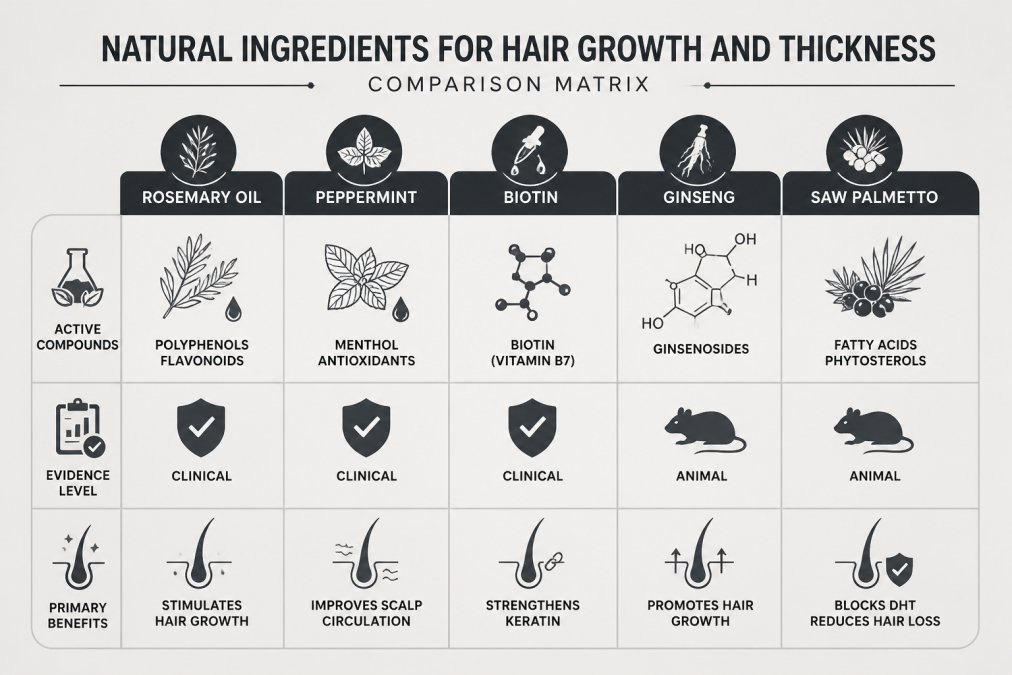
Strong hair starts at the scalp. The most effective natural ingredients for hair growth improve microcirculation, reduce inflammation, and nourish follicles to produce thicker, longer strands.
Rosemary Oil and Peppermint for Scalp Stimulation
Rosemary oil is the most researched natural ingredient for hair growth. A 2025 review published in PubMed Central's herbal remedies analysis found that rosemary leaf extracts promoted hair growth in topical applications. The mechanism is straightforward: rosemary increases blood flow to the scalp, delivering oxygen and nutrients directly to hair follicles.
Peppermint works similarly, stimulating the scalp while creating a refreshing sensation. Our Rosemary Hair & Scalp Strengthening Oil pairs both.

Biotin, Ginseng, and Saw Palmetto for Hair Strength
Biotin is a B-vitamin that strengthens the hair shaft from within. It doesn't stimulate growth directly; it reduces breakage by fortifying keratin.
Ginseng contains ginsenosides that nourish follicles and promote growth.
Natural Remedies for Hair Thinning and Breakage
Thinning and breakage look similar but have different causes and red flags. Treating them as one problem is the most common mistake in natural hair care.
First, tell shedding from breakage
- Shedding is hair falling from the root. Shed hairs are usually full-length with a small white bulb at one end. Normal shedding is roughly 50-100 hairs per day, and a temporary increase after illness, stress, childbirth, or a crash diet is common.
- Breakage is hair snapping along the shaft. Broken pieces are shorter, often uneven, and may cluster around the crown, hairline, or ends. It usually traces back to chemical processing, heat styling, tight hairstyles, or dryness.
- Thinning is a gradual reduction in density, often at the part, crown, or temples. It can reflect hormonal changes, nutritional deficiency, thyroid issues, or genetics.
A quick at-home check: collect hairs from your brush or shower drain for a few days. Full-length hairs with bulbs point to shedding; short, tapered fragments point to breakage. Patches of smooth scalp, sudden diffuse shedding, or scalp pain warrant medical care, not oils.
Evidence quality by remedy
Not all natural remedies carry the same weight of evidence. Sort them by whether human clinical studies support the claim, only lab or animal data exist, or the use is mainly traditional.
- Rosemary oil has the strongest human evidence among botanicals for scalp stimulation and growth. It's a reasonable first choice for gradual thinning, diluted in a carrier oil several times weekly.
- Peppermint oil has supportive lab and limited human data on scalp circulation. Dilute and patch-test it.
- Saw palmetto has mixed but promising results for androgen-related thinning. It warrants a clinician conversation if you take hormone-related medications.
Even well-supported ingredients take 3-6 months of consistent use before visible change, and the effect is usually modest, improved density or reduced shedding rather than dramatic regrowth.
Practical remedies by concern
For gradual thinning with a healthy scalp: a diluted rosemary oil scalp treatment 2-3 times weekly, massaged 3-5 minutes, left on 30 minutes to overnight, then washed out. Pair with gentle cleansing and avoid tight hairstyles.
For breakage-prone, dry hair: prioritize protein and moisture balance. Light oils like argan or jojoba on damp ends, a weekly rinse-out mask, and less heat styling do more than scalp stimulants.
For a flaky or oily scalp with thinning: treat the scalp condition first. Diluted tea tree oil, used briefly and rinsed, may help flaking, but persistent flaking needs a clinician since oils can worsen yeast-driven conditions.
Natural Oils for Hair and Scalp Care
Natural oils deliver fatty acids, vitamins, and antioxidants to the hair shaft and scalp to lock in moisture and prevent damage.
Carrier Oils: Coconut, Argan, and Castor Oil
Coconut oil is affordable and penetrates the hair shaft better than most oils, reducing protein loss and strengthening strands. The catch: it builds up on fine or thin hair.
Argan oil is lighter than coconut oil and absorbs quickly without residue.
Castor oil is thicker and more nourishing than both. Use it as a scalp treatment, not a leave-in: apply to the scalp, massage 2-3 minutes, and leave 15-30 minutes before shampooing.
Rosemary Hair & Scalp Strengthening Oil →
Essential Oils and Botanical Extracts
Essential oils are concentrated plant compounds. They must be diluted in a carrier oil before touching hair or scalp, never undiluted, as they can cause irritation or chemical burns.
Rosemary essential oil boosts scalp circulation, peppermint cools and invigorates, lavender soothes inflammation, and tea tree addresses buildup and flaking. Combining them amplifies results when properly diluted.
Aloe vera is technically an extract, not an oil, but it soothes the scalp, reduces inflammation, and hydrates without heaviness. Our Moisturizing Shampoo includes aloe juice, which gently cleanses while flooding strands with hydration.

DIY Natural Hair Masks and Topical Treatments
DIY masks let you control concentration and avoid additives. But the difference between a helpful mask and an irritating one comes down to three variables most guides ignore: dilution ratio, contact time, and frequency.
Formulation basics before you mix
- Carrier first, active second. Never apply essential oils undiluted. A conservative guideline is 1-2% dilution for leave-on scalp treatments, roughly 6-12 drops per 30 mL (1 oz) of carrier oil. For rinse-out masks, stay at the lower end until you know your scalp tolerates it.
- Patch test every new ingredient. Apply a small amount to the inner forearm or behind the ear, wait 24 hours, and check for redness, itching, or swelling. Repeat for each new essential oil.
- Match the carrier to your hair type. Coconut oil suits coarse, dry, or high-porosity hair but can leave fine hair limp. Argan and jojoba are lighter, better for fine or oily hair. Castor oil is thick, keep it to the scalp and roots.
Three masks with specific ratios and use cases
Rosemary and coconut pre-wash mask (for dry, coarse, or breakage-prone hair). Mix 3 tablespoons coconut oil with 6-8 drops rosemary essential oil. Warm slightly, apply to scalp and mid-lengths, massage 2-3 minutes, leave 20-30 minutes, then shampoo thoroughly. Use once weekly; skip if you have fine hair or an oily scalp.
Argan and aloe leave-in for ends (for frizz and dryness without heaviness). Combine 2 tablespoons argan oil with 1 tablespoon fresh aloe vera gel. Apply to damp mid-lengths and ends only, leave 15 minutes, then rinse lightly or leave in if very dry. It's the most forgiving option for fine or color-treated hair.
Castor oil scalp treatment (for a dry, tight scalp). Warm 1-2 tablespoons castor oil, apply to the scalp in sections, and massage 3-5 minutes. Leave 30 minutes, then shampoo twice. Patch test first, limit to once weekly, and don't combine with other scalp actives the same day.
Frequency and realistic timelines
Hair grows roughly 1 cm per month, so visible changes take at least 8-12 weeks of consistent use. A practical cadence is one rinse-out mask weekly plus a lighter leave-in on wash days. More frequent heavy oiling rarely speeds results and often causes buildup.
Evidence, Safety, and Realistic Expectations
Most guides overstate what natural ingredients can do. Some botanicals have solid clinical evidence; others rely on animal studies that don't translate to humans.
According to GoodRx's natural remedies analysis, caffeine, red-light therapy, and melatonin applied topically have the strongest evidence among natural hair-growth remedies.
Animal studies matter but aren't proof of human efficacy. The mechanism is sound, but dosage and delivery may differ in people.
Safety is non-negotiable: natural doesn't mean risk-free.
Building Your Natural Hair Care Routine
A natural hair care routine should address three things: cleansing, nourishing, and protecting.
Cleanse: Use a gentle shampoo that removes buildup without stripping natural oils.
Protect: Use a leave-in conditioner or lightweight oil on damp hair to lock in moisture.
Consistency matters more than complexity.
Our Deep Cleanse Scalp Scrub with Rosemary & Mint removes buildup that blocks natural ingredients from working.

Frequently Asked Questions
What are the best natural ingredients for hair health?
The most researched natural ingredients for hair health include rosemary oil, peppermint oil, coconut oil, and argan oil. Peppermint oil supports scalp stimulation. Plant extracts contain polyphenols, flavonoids, and fatty acids that nourish hair follicles and strengthen the hair shaft. However, evidence varies by ingredient, some have stronger clinical support than others. Starting with a scalp massage using rosemary or peppermint oil, or incorporating a natural hair mask weekly, allows you to test what works for your hair type.
Can natural remedies for hair thinning actually work?
Natural remedies can support hair health, but realistic expectations matter. Natural remedies work best when combined with scalp health practices: regular massage to improve microcirculation, deep conditioning to reduce breakage, and consistent use over weeks. If thinning persists, consult a healthcare provider to rule out underlying causes like nutritional deficiency or hormonal changes.
How often should I use natural oils and hair masks?
For natural oils, use 1-2 times per week as a scalp treatment or hair mask. Apply directly to the scalp and hair, massage gently, and leave for at least 15 minutes to allow full absorption. For DIY hair masks, once or twice weekly is ideal, more frequent use can overload hair with moisture. Start with once weekly to assess how your hair responds. The Rosemary Hair & Scalp Strengthening Oil from Regnal Radiance, for example, is designed for 1-2 weekly applications. Adjust frequency based on your hair type: fine or oily hair may need less frequent treatment, while dry or damaged hair benefits from weekly conditioning.
Are DIY natural hair treatments safe for sensitive scalps?
DIY treatments using pure natural ingredients are generally gentler than synthetic products, but safety depends on your scalp sensitivity and the ingredients used. Always patch test first: apply a small amount to the inside of your wrist or behind your ear 24 hours before a full scalp application. Essential oils like peppermint and rosemary can irritate sensitive skin if applied undiluted, dilute them in a carrier oil. Avoid ingredients you know trigger reactions. Aloe vera and coconut oil are typically well-tolerated, but individual responses vary. If your scalp is severely reactive, start with a single, mild ingredient like aloe juice in a gentle shampoo before progressing to oils or masks.