
Table of Contents
- What Clean Hair Care for Thinning Actually Means
- Best Clean Shampoo for Thinning Hair
- Scalp Care for Thinning Hair: The Foundation
- Natural Shampoo for Hair Loss and Strengthening
- Hair Care Routine for Thinning Hair: Step-by-Step
- Product Comparison: Which Clean Formula Works Best
- Conclusion: Building Your Clean Hair Care Plan
- Frequently Asked Questions
Last Updated: October 12, 2026
What Clean Hair Care for Thinning Actually Means
"Clean" is one of the least regulated words in the beauty aisle. Unlike "organic" or "drug" versus "cosmetic," it is largely a marketing term, so two brands can mean completely different things when discussing the best clean hair care for thinning.
In practice, most products labeled clean fall into one of three buckets:
- Free-from formulas: No sulfates (SLS/SLES), no silicones, no parabens, no phthalates, no synthetic fragrance. This is the most common use of the term.
- Naturally derived: A high percentage of ingredients sourced from plants or minerals, often paired with a certification such as COSMOS Natural or Ecocert.
- Nontoxic or conscious: A broader claim that may also cover packaging, sourcing, and animal testing, but is the hardest to verify because it has no fixed standard.
For thinning hair, the useful question is not "is this clean?" but "does this formula avoid what stresses a fragile scalp while including ingredients that support it?" That reframes clean as a functional standard.
A practical clean standard for thinning hair looks like this:
- Surfactants that cleanse without stripping. Sulfates are harsh on an inflamed scalp. Gentler alternatives include coco-glucoside, cocamidopropyl betaine, and sodium cocoyl isethionate. Note that "sulfate-free" does not automatically mean gentle; some sulfate-free surfactants still irritate sensitive skin.
- No heavy occlusives at the root. Silicones and heavy oils add slip to the strand, but at the scalp they build up, weigh down fine hair, and may worsen the appearance of thinning.
- Fragrance handled with care. Fragrance is a leading cause of scalp contact irritation. If your scalp is reactive, start with fragrance-free or low-fragrance formulas, even when naturally derived. Essential oils like peppermint and rosemary soothe some scalps and irritate others.
- Ingredient transparency. A brand that lists full INCI names, explains each ingredient, and discloses fragrance components is easier to evaluate than one hiding behind a proprietary blend.
- Evidence-aware claims. "Strengthens," "nourishes," and "supports scalp health" are cosmetic claims; "treats hair loss" or "regrows hair" are drug claims requiring regulatory review. Knowing which side a product sits on tells you what to expect.
Clean is not the same as effective for thinning. A formula can be impeccably clean and still do nothing for shedding, which is often driven by hormones, nutrition, medication, illness, or genetics, not product residue.
To test a label quickly, scan three things: the first three surfactants, whether fragrance appears high in the list, and whether the brand explains its claims or just asserts them.
Best Clean Shampoo for Thinning Hair
The right shampoo cleanses without stripping and lays groundwork for the products that follow. For thinning hair, that means avoiding sulfates, which strip the oils protecting delicate strands.
Our Sensitive Scalp Shampoo ($18.99) is COSMOS Natural certified, dermatologically tested, and uses gentle cleansing agents instead of sulfates. Betaine coats and strengthens without weighing hair down.
The Moisturizing Shampoo ($16.00), enriched with aloe juice, restores hydration while cleansing.
| Product | Key Ingredient | Best For | Price |
|---|---|---|---|
| Sensitive Scalp Shampoo | Wheat Protein, Betaine | Irritated, reactive scalps | $18.99 |
| Moisturizing Shampoo | Aloe Juice | Dry, dehydrated hair | $16.00 |
Scalp Care for Thinning Hair: The Foundation
Most guides get this wrong: they focus on the strands and ignore the scalp. Thinning starts at the root.
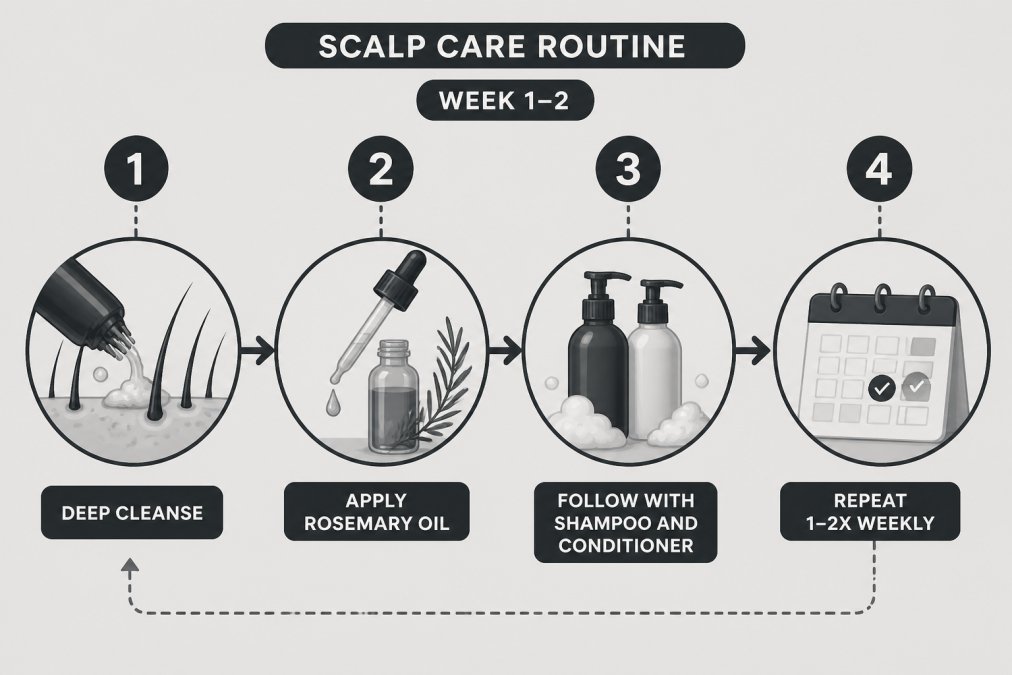
Scalp care for thinning hair means cleansing buildup and nourishing the skin beneath.
Nourishment comes next. The Rosemary Hair & Scalp Strengthening Oil ($12.99), applied between washes, uses rosemary, paired with peppermint for an invigorating sensation.

The sequence matters: cleanse with the scrub, then nourish with the oil.
Natural Shampoo for Hair Loss and Strengthening
Most clean hair care articles blur two very different goals. A shampoo that makes thinning hair look fuller and a treatment that addresses hair loss are not the same product, and confusing them leads to disappointment.
Cosmetic fullness and strengthening. These work on the hair you already have, adding volume, reducing friction, smoothing the cuticle, and lowering breakage. Common mechanisms:
- Hydrolyzed proteins (keratin, wheat, rice, soy): Temporarily fill gaps in the hair shaft, improving smoothness and reducing breakage. The effect is real but reversible; it does not change the follicle.
- Panthenol and humectants: Attract and hold water, which plumps the strand and can make fine hair appear slightly thicker.
- Cationic conditioning agents: Reduce static and friction, which matters because friction is a major cause of breakage in fine hair.
- Volumizing polymers: Coat the strand to increase diameter and lift at the root. Effective for appearance, washes out next wash.
Treatments intended to address hair loss. These aim to change what the follicle does:
- Regulated drug treatments: Ingredients such as minoxidil have regulatory approval for androgenetic alopecia in many markets and the strongest evidence base. They are not "clean" in the marketing sense, and that is worth acknowledging honestly.
- Prescription and in-office options: Finasteride, low-level laser therapy, platelet-rich plasma, and others, all of which require a clinician.
- Cosmetic ingredients with preliminary evidence: Caffeine, rosemary oil, saw palmetto, and peppermint oil appear in small studies or traditional use, but the evidence is far weaker than for regulated treatments. Rosemary oil has been compared to low-concentration minoxidil in at least one small trial, but the study was short and the population narrow.
Cosmetic products improve the appearance and condition of existing hair; treatments change the biology of the follicle. Clean formulas mostly live in the first category, which is fine as long as you know it.
Realistic expectations by timeline.
- Immediate (same day): Volume, slip, and shine from cosmetic formulas.
- 2 to 6 weeks: Reduced breakage and less shedding from handling, if you have switched from a harsh routine to a gentle one.
- 3 to 6 months: Any visible change in density from a treatment that actually affects the follicle. Hair grows roughly half an inch per month, so nothing meaningful happens faster than that.
- 6 to 12 months: The realistic window to judge whether a treatment is working for you.
Safety and sensitivity notes.
Rosemary Hair & Scalp Strengthening Oil →
- Patch test anything new, especially essential-oil-heavy formulas. Rosemary, peppermint, and tea tree can cause contact dermatitis in sensitive individuals.
- Pregnancy and breastfeeding: Some essential oils and certain active ingredients are not recommended. Check with a clinician before starting a new scalp treatment.
- Scalp conditions: Seborrheic dermatitis, psoriasis, and fungal infections need targeted treatment, not just a gentler shampoo.
- Sudden or persistent shedding: Treat it as a medical question first, a product question second.
If you want a single rule: choose clean formulas for the environment they create, and choose treatments, with professional guidance, for the biology they change. Both have a place, just not the same place.
Hair Care Routine for Thinning Hair: Step-by-Step
A routine only works if you follow it. Here's a practical plan:
Wash Days (2-3 times per week):
- Wet your hair and scalp thoroughly with lukewarm water
- Apply the Sensitive Scalp Shampoo or Moisturizing Shampoo (whichever matches your scalp type)
- Massage gently into the scalp for 1-2 minutes, working up a light lather
- Rinse completely, leftover shampoo residue causes buildup
- Apply the Keratin Volume Boost Conditioner to mid-lengths and ends
- Leave on for 2-3 minutes, then rinse thoroughly
Between Wash Days (1-2 times per week):

- Apply the Rosemary Hair & Scalp Strengthening Oil directly to the scalp
- Massage gently with your fingertips for 1-2 minutes
- Leave on for at least 15 minutes (or overnight if you prefer)
- Shampoo out with your regular shampoo
- Condition as normal
Weekly Deep Cleanse (once per week):
- Wet your hair and scalp
- Apply the Deep Cleanse Scalp Scrub with Rosemary & Mint
- Massage gently, focusing on the scalp, for 1-2 minutes
- Leave on for 5-15 minutes to allow the formula to work
- Rinse thoroughly
- Follow with shampoo and conditioner as usual
Non-Wash Days (optional): Use the Quick Refresh Dry Shampoo Spray ($16.00) to absorb excess oil at the roots, extending time between washes. Shake well, hold 6-8 inches from roots, spray lightly, and massage with your fingertips to blend. No white residue, no rinsing required.
| Step | Frequency | Product | Time |
|---|---|---|---|
| Cleanse scalp | 1x/week | Deep Cleanse Scalp Scrub | 10-15 min |
| Nourish scalp | 1-2x/week | Rosemary Oil | 15+ min |
| Shampoo & condition | 2-3x/week | Sensitive Scalp + Keratin Conditioner | 5 min |
| Refresh between washes | As needed | Quick Refresh Dry Shampoo | 2 min |
Product Comparison: Which Clean Formula Works Best
Match your specific concern to the right formula:
If your scalp is irritated, itchy, or reactive: Start with the Sensitive Scalp Shampoo ($18.99) and the Keratin Volume Boost Conditioner ($16.99). The shampoo is dermatologically tested and COSMOS Natural certified. The conditioner adds strength without irritation. Together, they cost $35.98 and address both sensitivity and thinning.

If your hair is dry and brittle: The Moisturizing Shampoo ($16.00) paired with the Keratin Conditioner ($16.99) creates a hydration and strength system. Total: $32.99.
If you want a complete system: The Hair Care Ritual Bundle ($63.00) includes all four core products: Sensitive Scalp Shampoo, Keratin Volume Boost Conditioner, Rosemary Hair & Scalp Strengthening Oil, and Quick Refresh Dry Shampoo Spray.
If budget is your priority: Start with the Moisturizing Shampoo ($16.00) and the Rosemary Oil ($12.99). Total: $28.99. This pair addresses moisture and scalp nourishment without the conditioner cost.
Conclusion: Building Your Clean Hair Care Plan
Thinning hair responds best to the best clean hair care for thinning, which means a consistent routine addressing both scalp and strands.
Start with the Sensitive Scalp Shampoo and Keratin Volume Boost Conditioner as your foundation, add the Rosemary Hair & Scalp Strengthening Oil once weekly, and include the Deep Cleanse Scalp Scrub once per week if buildup is a concern.
The Hair Care Ritual Bundle ($63.00) gives you everything you need to start. It's designed to work as an integrated system, and it's the most efficient entry point.
The challenge with thinning hair isn't finding products, it's finding ones that support scalp health without irritation.
Frequently Asked Questions
What is the best clean shampoo for thinning hair?
The best clean shampoo for thinning hair depends on your scalp condition. For sensitive scalps, the Sensitive Scalp Shampoo (£18.99) uses dermatologically tested, COSMOS Natural certified ingredients without harsh irritants. For general thinning, the Moisturizing Shampoo (£16.00) with Aloe Juice gently cleanses without stripping natural oils that protect fine strands. Both avoid sulfates and synthetic buildup that weigh hair down, making them ideal for restoring volume and density.
How often should I wash fine or thinning hair?
Fine and thinning hair benefits from washing 2-3 times per week rather than daily, as frequent washing strips natural scalp oils that protect delicate strands. Between washes, use a dry shampoo like Quick Refresh Dry Shampoo Spray (£16.00) to absorb excess oil and refresh volume without water or residue. This routine extends time between washes while keeping your hair looking fuller and healthier.
What ingredients should I look for in a clean shampoo for thinning hair?
Look for rosemary, keratin, caffeine, and botanical extracts that strengthen without weight. Keratin fortifies fragile strands and reduces breakage. Caffeine reactivates the scalp and adds lift. Avoid silicones, sulfates, and heavy oils that flatten fine hair. Clean formulas certified as natural or eco-friendly (like COSMOS Natural) ensure you're avoiding harsh chemicals that irritate sensitive scalps.
Can clean hair care products help make thinning hair look fuller?
Yes. Clean formulas designed for thinning hair work through multiple angles: volumizing conditioners like Keratin Volume Boost Conditioner (£16.99) add thickness without heaviness, scalp treatments remove buildup that flattens roots, and lightweight shampoos prevent stripping. The result is hair that stands fuller at the root and looks denser overall. Pairing these with a dry shampoo between washes maintains that fuller appearance throughout the week.
What is the best hair care routine for thinning hair?
A complete routine includes cleanse, condition, nourish, and refresh. Start with a gentle clean shampoo 2-3 times weekly, follow with a lightweight volumizing conditioner on mid-lengths and ends only, use a scalp oil or treatment 1-2 times weekly to strengthen from the root, and apply dry shampoo on non-wash days to maintain volume. The Hair Care Ritual Bundle (£63.00) combines all four steps: shampoo, conditioner, strengthening oil, and dry shampoo for a complete system.