
Last Updated: November 16, 2026
Quick Summary
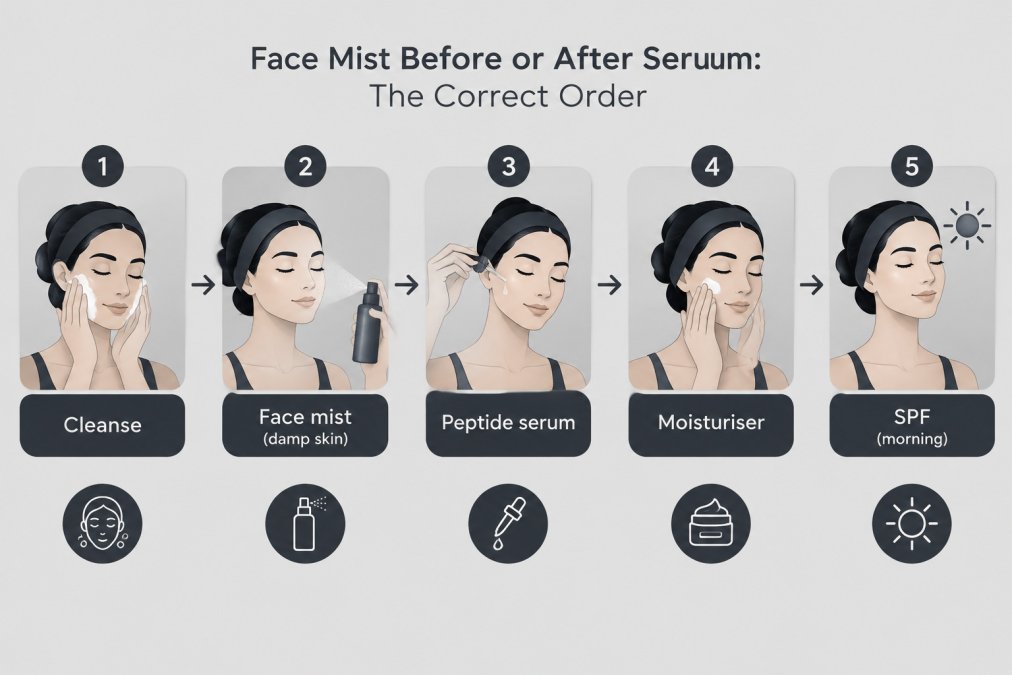
Apply the prebiotic face mist first while skin is still slightly damp, then follow with the peptide serum. The mist softens skin and helps the serum spread evenly. Finish with moisturiser, and add SPF in the morning. Use the pairing twice daily and judge results over several weeks.
- Apply the mist first, while skin is still slightly damp.
- Follow the mist with the peptide serum, then moisturiser.
- Add SPF in the morning as the final step.
- Patch test any new serum on the jaw or inner arm for several days.
- Judge results over several weeks of consistent use, not a few days.
Table of Contents
- What a Peptide Serum and a Prebiotic Face Mist Each Do
- Face Mist Before or After Serum: The Correct Order
- Prebiotics, Probiotics and Postbiotics: Which One Your Routine Needs
- Layering Cautions, Patch Testing and Sensitive Skin
- How to Evaluate a Formula and Its Ingredient List
- Step-by-Step Routine: Using the Biodance Collagen Peptide Jelly Serum Mist
- Building Your Two-Product Routine With Regnal Radiance
- Frequently Asked Questions
What a Peptide Serum and a Prebiotic Face Mist Each Do
A peptide serum with a prebiotic face mist is a two-step approach: one product targets the look of fine lines, the other supports the skin's surface microbiome and hydration. This guide from Regnal Radiance explains what each product does, how to layer them, and what results are realistic to expect. Journal of Drugs in Dermatology peptide serum trial reported statistically significant improvements in the appearance of facial lines by week 14, though the sample size is not stated in the source supplied here.
Peptide serum benefits and realistic expectations
Peptides are short chains of amino acids that skincare formulators use as signalling ingredients. The serum is the concentrated layer, so it does most of the work on lines and firmness. Results from peptide serums vary by skin type, consistency and age, so treat any expectation of improvement as a direction rather than a guarantee.
Prebiotic face mist benefits for the skin microbiome
A prebiotic mist feeds beneficial microbes already living on the skin rather than adding new ones. It is typically used for light hydration and a sense of freshness during the day. A two-week prospective study of Lactobacillus ferment lysate prebiotics examined this type of mist for facial redness, but the result available here does not give numerical findings, so no effect size should be assumed.
Face Mist Before or After Serum: The Correct Order
Apply the mist first, while skin is still slightly damp, then follow with the serum. The mist softens the skin and helps the serum spread evenly. Finish with moisturiser, and SPF in the morning.
Prebiotics, Probiotics and Postbiotics: Which One Your Routine Needs
Prebiotics feed existing skin microbes, probiotics are live microbes applied to the skin, and postbiotics are compounds produced by microbes. For most people building a simple routine, a prebiotic product is the easiest starting point because it does not require introducing living organisms. Look at the ingredient list to see which of these categories a product actually contains.
Layering Cautions, Patch Testing and Sensitive Skin
A new product can still irritate reactive skin, even when it is marketed as gentle. Patch test any new serum on a small area of the jaw or inner arm for several days before using it across the face. Introduce one new product at a time so that any reaction can be traced to its source. If irritation appears, stop using the product and consult a dermatologist.
For a fuller explanation of layering rules, read 7 Rules for Layering Niacinamide and Peptide Serum, and for a step-by-step test method see How to Patch Test a New Face Serum Safely.
How to Evaluate a Formula and Its Ingredient List
Many product descriptions explain what a peptide serum and prebiotic mist are supposed to do; fewer explain how to read the label and decide whether a specific formula is worth trying. Use the checklist below to evaluate any candidate product before you buy.
Peptide types and position. Ingredients are listed in descending order of concentration, so scan the first five to eight items. Look for named peptides rather than a vague "peptide complex." A peptide appearing after fragrance or preservatives is likely present at a token level.
Prebiotic ingredients. Prebiotics are typically fibers and sugars that feed skin microbes, such as inulin, alpha-glucan oligosaccharide, or lactobacillus ferment lysate. Check whether the prebiotic is named specifically or hidden behind a marketing term like "microbiome blend."
Humectants. Glycerin, hyaluronic acid, and butylene glycol are the workhorses that make a mist feel hydrating. A mist whose first ingredients are water and alcohol will feel refreshing but can leave skin tighter once it evaporates.
Fragrance and alcohol. Fragrance and denatured alcohol are common irritants for reactive skin. If your skin is sensitive, favor formulas that list fragrance-free or omit alcohol denat. near the top.
Preservatives and packaging. A water-based mist needs a preservative system; phenoxyethanol and ethylhexylglycerin are common and generally well tolerated. An airless or sealed mist bottle reduces microbial contamination compared with an open spray.
Claim-to-ingredient match. If a product claims barrier support, look for ceramides, fatty acids, or cholesterol; if it claims soothing, look for panthenol, allantoin, or bisabolol. A claim with no matching ingredient is a marketing signal, not a formula signal.
Watch out: a long ingredient list is not automatically better; every extra botanical and essential oil is another potential irritant to patch test, so a shorter, well-labeled formula is often easier to introduce.
For a fuller explanation of layering rules, read 7 Rules for Layering Niacinamide and Peptide Serum, and for a step-by-step test method see How to Patch Test a New Face Serum Safely.
Step-by-Step Routine: Using the Biodance Collagen Peptide Jelly Serum Mist
Running a peptide serum and a prebiotic mist together day to day is easier with clear amounts, timing, and frequency, so the two products work as a system rather than two unrelated steps.
- Cleanse with a gentle, non-stripping cleanser and pat skin until it is just damp, not dripping. A slightly damp surface helps the mist spread evenly and gives the serum a little slip.
- Mist the face from about 20 centimetres away, two to three pumps for the full face and neck. Let it sit for 30 to 60 seconds so the water and humectants begin to absorb rather than sitting on top of the skin.
- Apply the peptide serum while the skin is still tacky. Use roughly a pea-sized amount for the face and a second pea-sized amount for the neck; press and pat rather than rubbing, especially around the eyes and nasolabial folds where the skin is thinner.
- Seal with moisturiser within a minute or two so the humectants in the mist and serum draw water into the skin rather than evaporating from it. In the morning, finish with broad-spectrum SPF.
A common pattern is to use the mist-and-serum pairing twice daily, morning and evening. Judge results over several weeks of consistent use rather than after a few days, since barrier and hydration changes build gradually.
Watch out: misting and then waiting too long before applying serum can let the surface dry down and make the serum drag; if that happens, re-mist lightly rather than adding more serum.
If you want a jelly-textured serum that layers well under a mist, the Bioactive Prebiotics Jelly Serum is designed to absorb quickly without residue. Pair it with the Microbiome Prebiotics Face Mist for a complete daily routine.
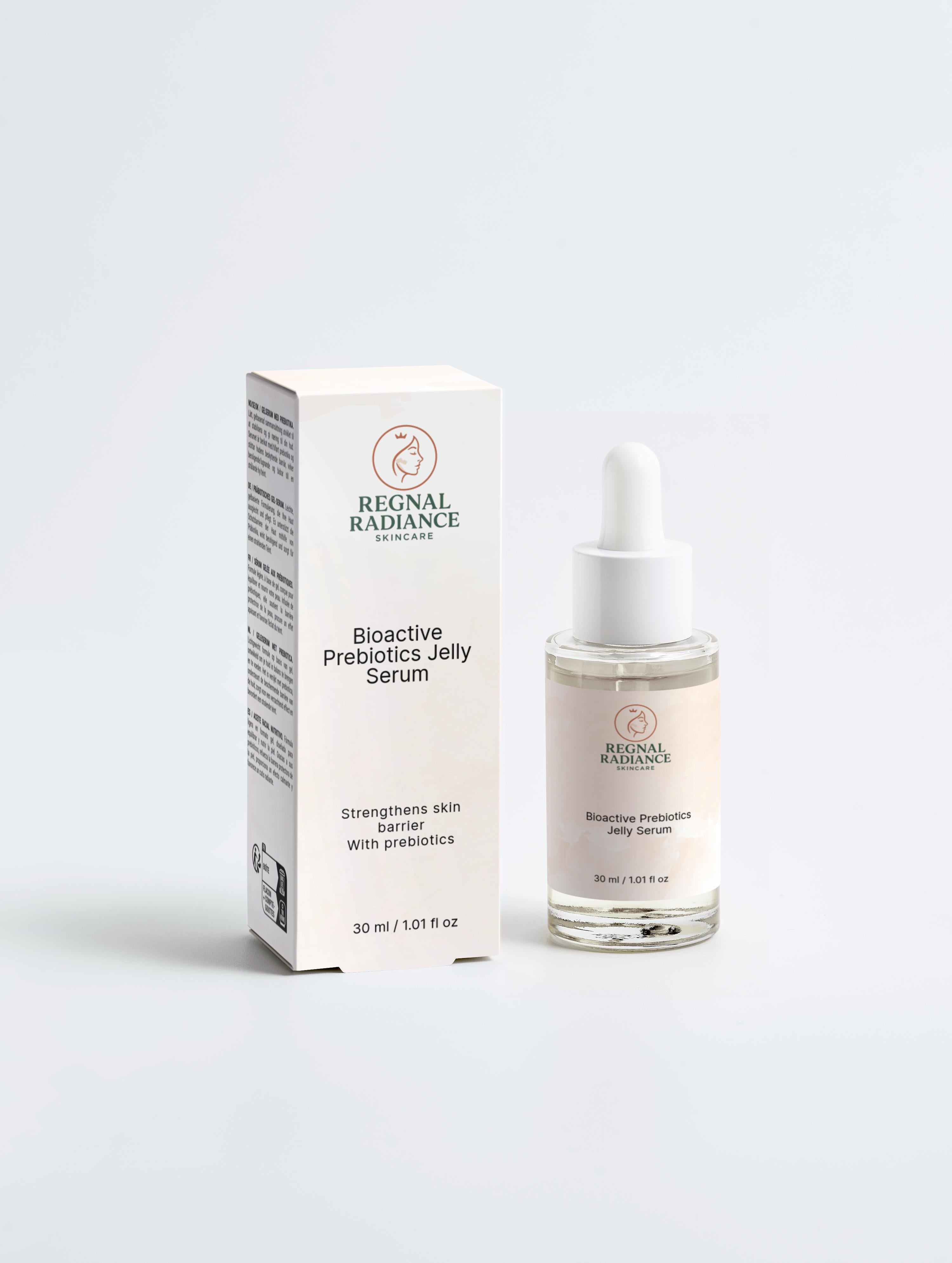
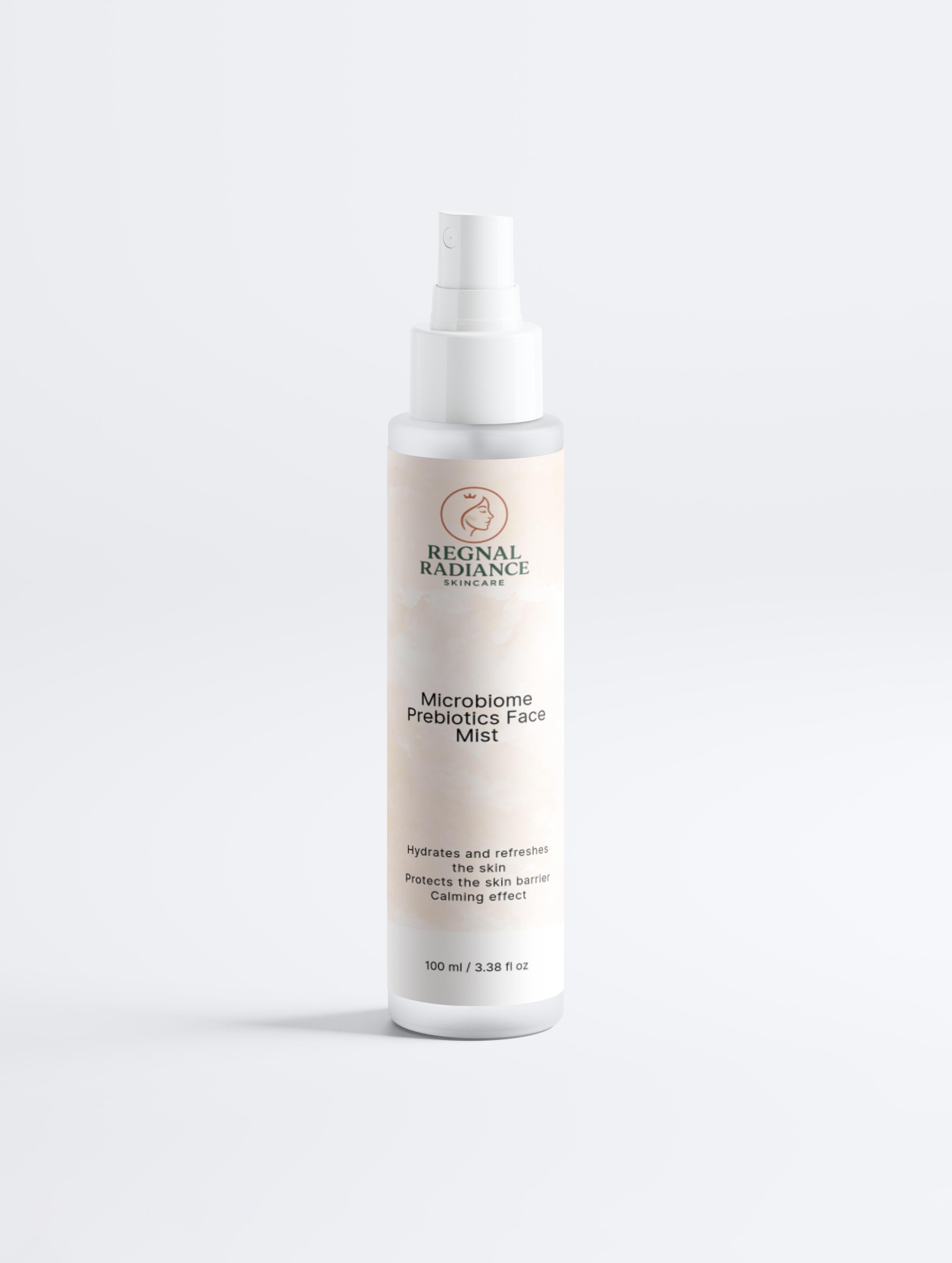
The steps below set out the order, amounts and timing for layering a peptide serum with a prebiotic mist.
| Step | What to do | Time or frequency |
|---|---|---|
| Cleanse | Gentle, non-stripping cleanser; pat until just damp | Morning and evening |
| Mist | Two to three pumps from about 20 cm, face and neck | Let sit 30 to 60 seconds |
| Serum | Pea-sized amount for face, second for neck; press and pat | While skin is still tacky |
| Moisturise | Seal in humectants within a minute or two | Finish with SPF in the morning |
| Consistency | Use the pairing twice daily | Judge results over several weeks |
Building Your Two-Product Routine With Regnal Radiance
A two-product routine keeps the steps short. Start with one peptide-focused treatment and one prebiotic mist, use them consistently for several weeks, and judge results over time rather than after a few days. The Anti-Aging Peptide Collection is an option if you want a fuller peptide routine that includes an eye cream and a day-and-night moisturiser.
Keeping a routine simple makes it easier to stick with. At Regnal Radiance, we recommend starting with a patch test, adding one product at a time, and giving each step several weeks before deciding whether it works for your skin.
Frequently Asked Questions
Is prebiotic good for your face?
Prebiotics are ingredients intended to feed the beneficial microorganisms already living on the skin, which supports the skin microbiome. Regnal Radiance's Microbiome Prebiotics Face Mist is formulated with prebiotics and hyaluronic acid to hydrate and help protect the skin barrier against environmental stressors. Prebiotic products are best seen as supportive additions to a routine rather than treatments for a specific condition. Results vary by skin type, and people with persistent irritation or a medical skin concern should consult a dermatologist.
Should I use face mist before or after serum?
In most routines, use a hydrating mist after cleansing and before a serum, so the serum sits on slightly damp skin and absorbs more evenly. Some people prefer to mist after serum to set the layers and add a refreshing finish, especially when applying makeup. Either order is reasonable, but avoid applying a mist on top of a thick cream or oil, since it can dilute the formula. A simple test is to see whether the serum spreads easily and absorbs without pilling.
Can you use peptides and prebiotics together?
Peptide serums and prebiotic mists can be used together, since they are marketed for different aspects of skin care: peptides for the look of firmness and smoothness, and prebiotics for microbiome balance and hydration. Introduce one product at a time for a week or two so you can notice any reaction. Pair the Bioactive Prebiotics Jelly Serum with the Microbiome Prebiotics Face Mist for a matched prebiotic routine. Stop using both if stinging or redness develops.
What does peptide serum do for your face?
Peptide serums are formulated with short chains of amino acids that are used in cosmetics to support the look of smoother, more supple skin. Regnal Radiance's Anti-Aging Peptide Collection includes a serum with hexapeptide-11, hyaluronic acid and ginkgo biloba extract, marketed to minimize the look of fine lines. Peptides are not a replacement for sunscreen or medical treatment. Set realistic expectations and judge results over consistent use rather than after a few days.
