
Quick Summary
Anti-frizz products for curly hair work best on frizz caused by dryness and loss of definition, not on damage or heat stress. Choose by curl pattern and porosity: light mists suit type 2 and 3 curls, while coils usually need a richer leave-in first. The Regnal Radiance Texture Mist is a lightweight option for type 2 and 3 curls.
- Products help frizz from dryness and loss of definition, but cannot rebuild damaged strands.
- Type 2 and 3 curls suit light mists or serums; heavy creams pull the wave down.
- Type 4 coils often need a richer leave-in or cream before a light mist or oil.
- Apply the Texture Mist to damp hair, then scrunch upward to enhance definition.
- Porosity can shift with heat, color, or humidity, so retest products when your routine changes.
Table of Contents
- Why Curly Hair Frizzes and What Products Can Actually Fix
- How to Choose Anti-Frizz Products by Curl Type and Porosity
- Anti-Frizz Spray for Curly Hair: Regnal Radiance Texture Mist
- Anti-Frizz Serum for Curly Hair: Matching the Texture to Your Curls
- Drugstore Anti-Frizz Products for Curly Hair: Budget Versus Brand Picks
- Building a Curly Hair Frizz Control Routine From Wash Day to Refresh
- Start Your Curl Routine With the Regnal Radiance Set
- Frequently Asked Questions
Why Curly Hair Frizzes and What Products Can Actually Fix
Anti-frizz products for curly hair can help, but only for certain causes of frizz. Curly hair is naturally more prone to frizz because its structure makes it harder for oils from the scalp to travel down the strand, so the cuticle often stays lifted and rough.
Knowing where a product helps and where it cannot is the fastest way to stop wasting money on the wrong bottle.
Which Frizz Causes Products Can Address
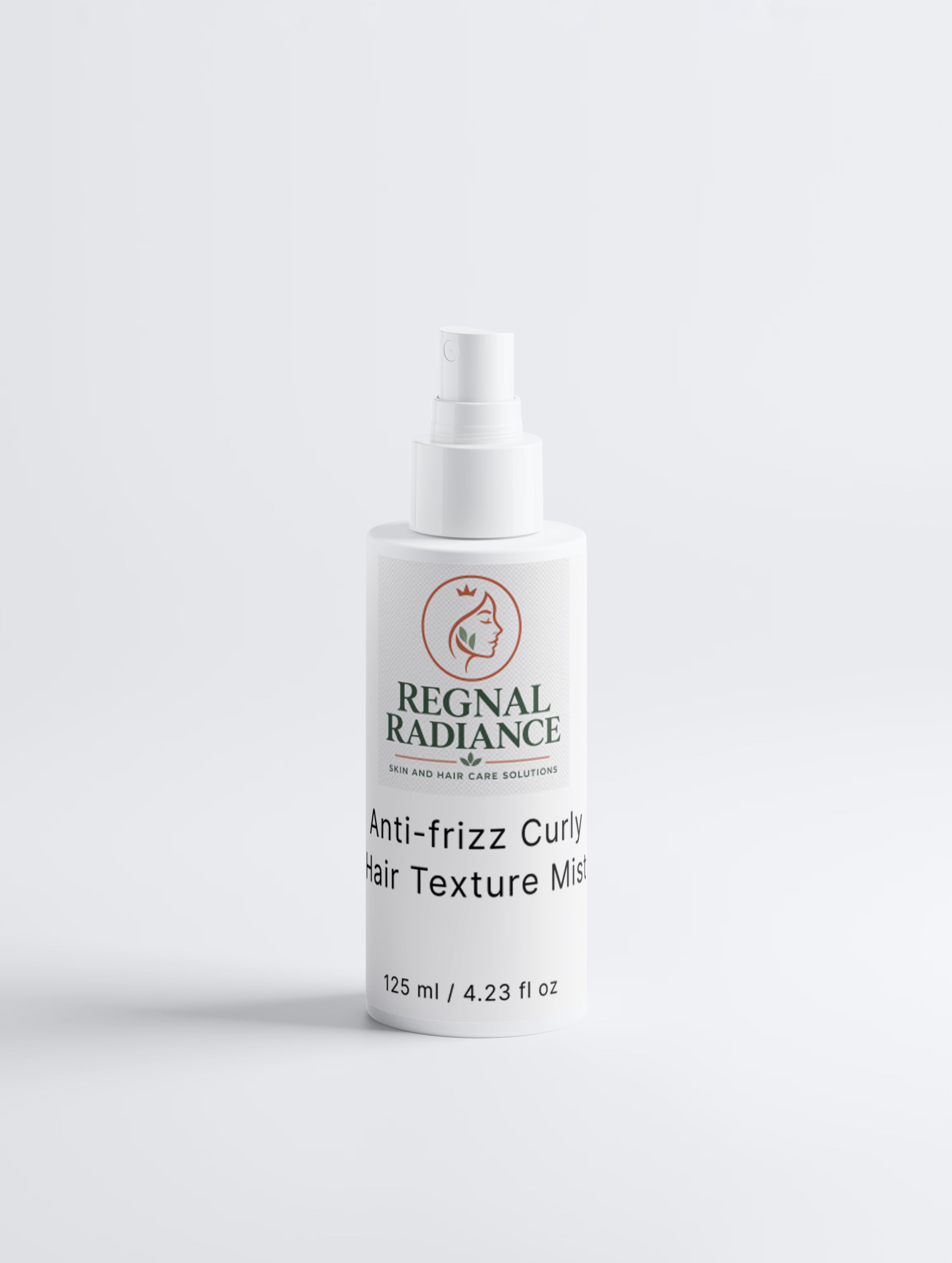
Products work best on frizz driven by dryness and loss of definition. A lightweight protein mist, for example, can add hold and bounce while softening the surface of the strand. The Anti-frizz Curly Hair Texture Mist uses hydrolyzed rice protein and linseed extract for hold and bounce, with aloe vera and glycerin to keep curls soft and hydrated.
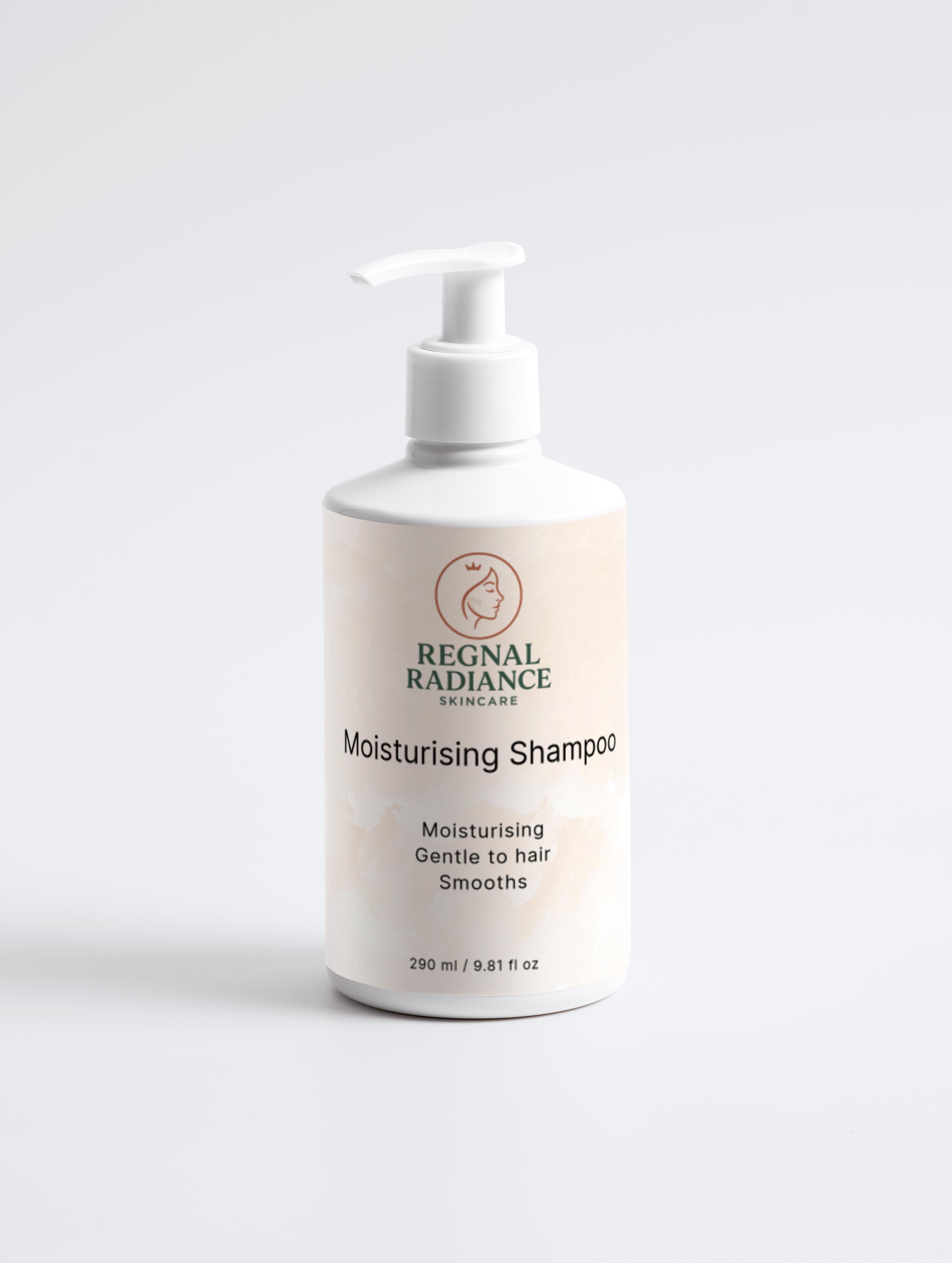
Moisture-based products also help hair that feels rough or dehydrated. The Moisturizing Shampoo is formulated to restore moisture and smoothness to dry, dehydrated hair.
Where Products Fall Short
Products cannot fix every cause of frizz. Some frizz comes from damage, heat stress, or hair that is simply too dry to hold a style, and no topical product rebuilds the strand. Set your expectations accordingly and treat products as one part of a routine rather than a complete fix.
How to Choose Anti-Frizz Products by Curl Type and Porosity
A more useful filter combines three variables: curl pattern, porosity, and strand thickness. Each one changes which product texture and ingredients will control frizz without flattening definition.
Curl pattern: match the product weight to the coil
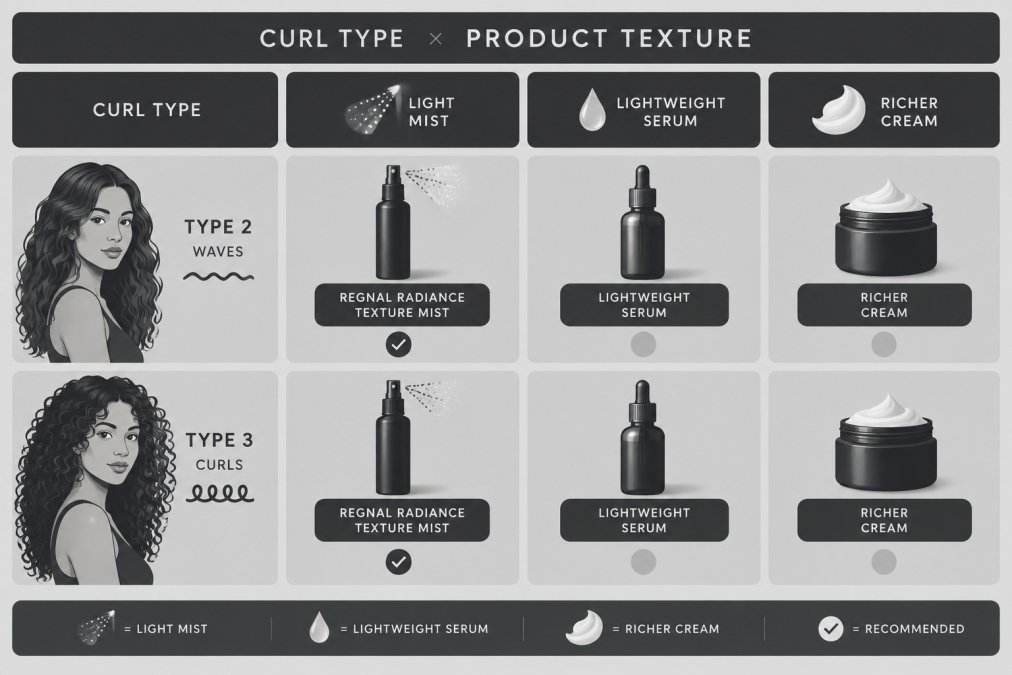
- Type 2 waves: Frizz usually shows up as flyaways and a loss of the S-wave. Light mists and serums work best because creams and heavy oils pull the wave down. The Regnal Radiance Texture Mist is suited to type 2 and type 3 hair.
- Type 3 curls: Frizz appears as halo frizz around the mid-lengths and ends. A mist or light serum applied to damp hair and scrunched upward gives hold and bounce without crunch. The Texture Mist is suited to this pattern.
- Type 4 coils: Frizz often signals dryness rather than a need for more hold. Coils generally need a richer leave-in or cream first, then a light mist or oil on top to seal. The Texture Mist is listed for type 2 and type 3 curls, so it is not designed for type 4 hair.
Porosity: the variable most product guides skip
Porosity describes how easily the cuticle lets moisture in and out, and it changes which anti-frizz ingredients help. If you are still unsure whether a natural routine suits your curls, read a deeper guide to curly hair care first.
- High porosity (often from heat, color, or mechanical damage): the cuticle is raised, so hair absorbs moisture fast and loses it fast. Humectants like glycerin pull water in, which helps in dry air but can backfire in high humidity because the hair keeps grabbing moisture from the air. High-porosity hair usually does better with film-formers and light oils that slow moisture exchange, plus regular protein support to temporarily patch the cuticle. The Texture Mist contains hydrolyzed rice protein and linseed extract.
- Low porosity: the cuticle is tight, so heavy butters, oils, and silicone-heavy serums sit on top and weigh curls down. Light, water-based mists are the safer first step. Apply to damp hair rather than soaking wet hair so the product distributes evenly.
- Medium porosity: most products behave predictably; choose based on texture preference and climate rather than correction.
Strand thickness: fine versus coarse
Fine strands show product buildup quickly, so a little mist goes a long way and heavy creams cause limpness. Coarse strands have more surface area and tolerate richer textures, but they also need more product per application, which affects cost per use. A common pattern is that fine-haired curlies over-apply because they copy routines built for coarse hair.
A quick decision path
- Identify your pattern (2, 3, or 4) and your porosity (does hair dry fast or slow after washing?).
- Fine + low porosity: start with a light mist like the Texture Mist on damp hair.
- Coarse + high porosity: layer a richer leave-in first, then seal with a light mist or oil.
- Reassess in humid versus dry weather, because the same hair can behave like different porosity in different climates.
Watch out: porosity is not a fixed label. Heat styling, color, and seasonal humidity can shift how your hair behaves, so retest products when your routine or climate changes rather than assuming last year's match still holds.
The article's guidance on curl pattern and porosity can be condensed into a quick reference.
| Hair type | Frizz pattern | Product approach |
|---|---|---|
| Type 2 waves | Flyaways, loss of S-wave | Light mists and serums; avoid heavy creams |
| Type 3 curls | Halo frizz at mid-lengths and ends | Mist or light serum on damp hair, scrunch upward |
| Type 4 coils | Frizz signals dryness | Richer leave-in or cream first, then light mist or oil |
| High porosity | Hair absorbs and loses moisture fast | Film-formers, light oils, regular protein support |
| Low porosity | Heavy products sit on top | Light, water-based mists on damp hair |
| Fine strands | Buildup shows quickly | Use a little mist; heavy creams cause limpness |
Anti-Frizz Spray for Curly Hair: Regnal Radiance Texture Mist
A spray works well when you want to refresh curls between washes or set your style on damp hair.
It is vegan and nut-free, and it defines curls without a crunchy finish.
Anti-frizz Curly Hair Texture Mist, $16.00: view the full-size Curly Hair Texture Mist
A second listing of the Texture Mist is also available at $8.80: see the second listing of the Texture Mist.
Anti-Frizz Serum for Curly Hair: Matching the Texture to Your Curls
A serum sits between a mist and a cream on the weight scale, but "serum" is a texture label, not an ingredient guarantee. Two serums can behave completely differently depending on what carries the formula. Understanding the carrier is the fastest way to pick one that controls frizz without collapsing your curls.
What actually separates one serum from another
- Silicone-based serums (dimethicone, cyclopentasiloxane, amodimethicone) form a smooth film that blocks humidity and adds slip. They are the most reliable short-term frizz fighters in humid weather, but they build up on low-porosity hair and need a clarifying wash periodically. They do not add moisture; they seal it in or out.
- Oil-based serums (argan, jojoba, squalane, rosemary) add shine and reduce surface friction. They are lighter than silicones on fine hair but offer less humidity blocking. The Rosemary Hair and Scalp Strengthening Oil is an oil and is listed for application to the scalp and hair.
- Water-based serums with humectants (glycerin, aloe, hyaluronic acid) pull moisture toward the hair. They help in dry climates and on dehydrated hair, but in high humidity they can attract too much water and increase frizz. This is the trade-off most product lists ignore.
Matching serum texture to your curls
- Fine curls that fall flat: choose a water-based or very light oil serum, apply two to three drops to damp ends only, and avoid the roots. A mist like the Texture Mist is often a better first step than a serum because it distributes more evenly on fine hair.
- Medium curls with halo frizz: a silicone-light or oil-based serum on damp mid-lengths and ends gives smoothing without weight. Apply after your leave-in, not before, so the serum seals rather than blocks the moisturizer.
- Coarse or high-porosity curls: a silicone-based serum or a richer oil layer gives the most humidity protection. Apply to damp hair, then scrunch; do not rake through dry curls, which breaks up definition.
How to apply a serum without causing limpness
- Start with a small amount, roughly a pea-sized drop for fine hair or a dime-sized drop for coarse hair.
- Emulsify between palms, then press and scrunch into damp lengths and ends.
- Build in a second small application only if frizz persists after drying.
- On refresh days, use water first to reactivate existing product, then add serum only to the ends.
Watch out: layering a silicone serum over a water-based leave-in on soaking-wet hair can cause the serum to bead and sit on the surface instead of sealing. Apply the serum to damp, not dripping, hair so the film forms evenly.
Serum versus mist versus cream: a quick rule
Use a mist when you want lightweight refresh and definition on fine or wavy hair. Use a serum when you need targeted smoothing on ends and mid-lengths, especially in humidity. Use a cream when the primary problem is dryness rather than surface frizz.
Drugstore Anti-Frizz Products for Curly Hair: Budget Versus Brand Picks
Compare cost per use rather than sticker price. Check the ingredient list and buy what fits your routine, not just the cheapest bottle.
Building a Curly Hair Frizz Control Routine From Wash Day to Refresh
A reliable routine works in stages. For a step-by-step path to moving over to these products, follow this guide to switching to clean haircare.
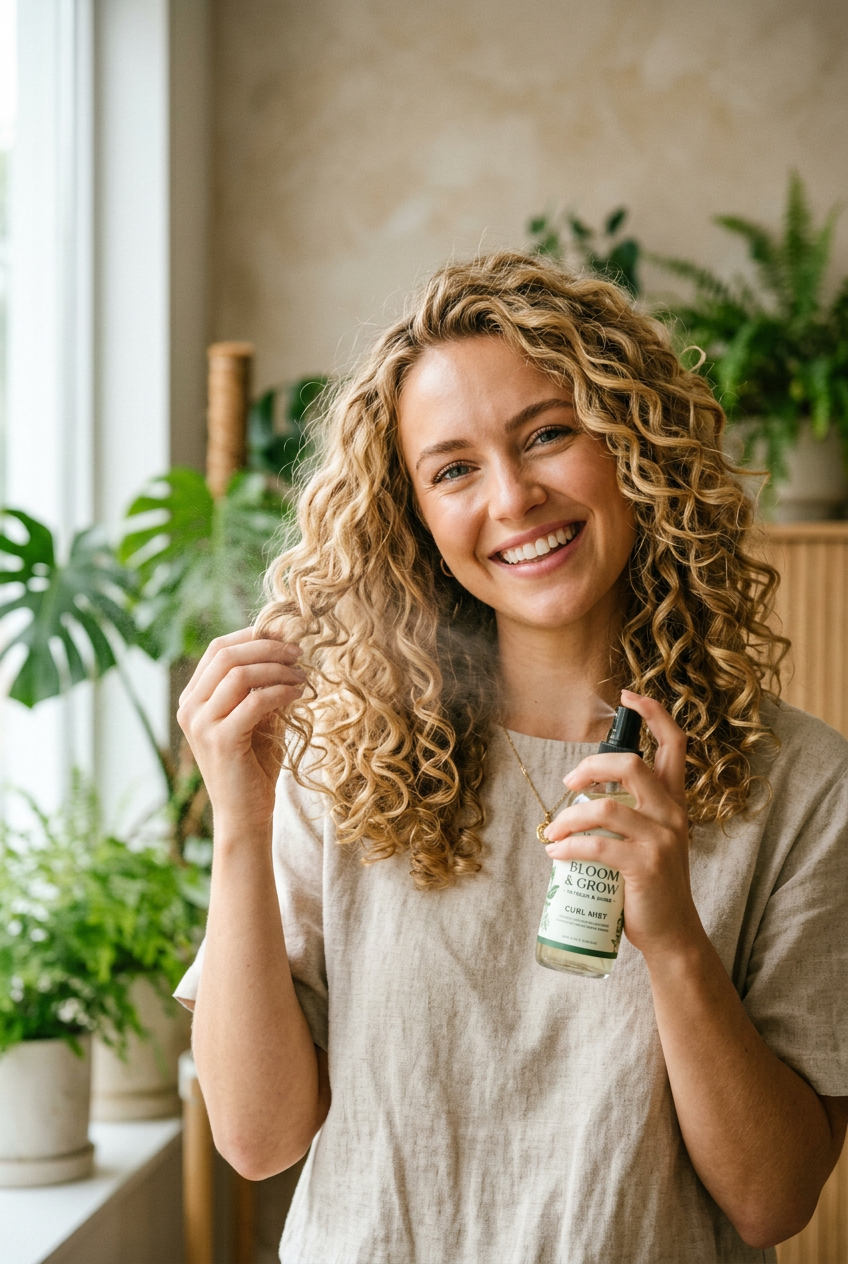
On styling days, apply the Texture Mist to damp hair and scrunch upward. Between washes, a light spritz on dry hair can revive curls and tame frizz without starting over.
Common mistakes include over-applying product, skipping a mist and relying on oil alone, and using heavy styling products on fine curls.
Start Your Curl Routine With the Regnal Radiance Set
If you want every step covered in one purchase, the Hair Care Ritual Bundle includes a sensitive scalp shampoo, a volume-boosting conditioner, the Rosemary Strengthening Oil, and a dry shampoo spray for non-wash days. You can see everything in the complete ritual bundle before you decide.
The bundle includes four products and is priced at 63.00. Start with the Texture Mist and Moisturizing Shampoo, then add the rest as you learn what your curls need.
Frequently Asked Questions
What product is best for frizzy curly hair?
The best product depends on your curl pattern and how dry your hair gets. For type 2 waves and type 3 curls that fall flat, a lightweight protein mist such as the Regnal Radiance Anti-frizz Curly Hair Texture Mist adds definition and bounce without crunch. It works on damp hair to set a style or on dry hair between washes. Coarser or very dry curls may need a richer leave-in or cream instead, so match the texture to your hair before buying.
What stops curly hair from frizzing?
Frizz usually comes from dryness, humidity and lifted cuticles. Products that add moisture and seal the strand help most, along with gentle washing, applying product to damp hair and avoiding rough towel drying. A moisturizing shampoo such as the Regnal Radiance Moisturizing Shampoo, followed by a conditioner, supports hydration from the start. Frizz caused by heat damage or very low moisture may not respond fully to any product alone.
What is the best anti-frizz serum for curly hair?
A good anti-frizz serum for curly hair should be lightweight enough not to weigh curls down, yet smoothing enough to tame flyaways. Look for formulas with humectants and light oils and apply a small amount to damp hair. Regnal Radiance does not currently list a serum in its catalogue, so if you want a serum, compare ingredients and texture carefully, and use the Texture Mist if you need a lighter-weight finishing product instead.
Which drugstore products help control frizz in curly hair?
Drugstore products can work well if their ingredients suit your curl type. Check labels for moisturizing agents such as glycerin, aloe and plant oils, and avoid products that leave a crunchy or sticky feel on fine curls. Price alone does not predict results, so test small sizes and judge by how curls look after drying. For a premium option with a clean ingredient focus, the Regnal Radiance Moisturizing Shampoo and Texture Mist are alternatives to compare against.
