
Table of Contents
- Why Switch to Clean Haircare
- Understanding the Natural Shampoo Transition Period
- How to Transition to Natural Hair Care: Step-by-Step
- Clean Shampoo for Hair Buildup: Removing Product Residue
- Clean Haircare for Thinning Hair: What to Expect
- Common Mistakes to Avoid During Your Switch
- How to Switch to Clean Haircare: Your First Month
- Frequently Asked Questions
Last Updated: October 17, 2026
Why Switch to Clean Haircare
Making the switch to clean haircare is one of the most impactful decisions you can make for your hair's long-term health. At Regnal Radiance, we understand that conventional haircare products often contain synthetic ingredients and chemical buildup that can weigh hair down, strip natural oils, and leave your scalp feeling irritated or imbalanced.

The shift toward clean haircare isn't just a trend. It's about restoring your hair to its natural state. When you switch to clean shampoo and conditioner, you're removing years of product residue that conventional formulas leave behind. This buildup can mask your hair's true texture, make it look dull, and prevent natural moisture from reaching your strands.
Many people find that their hair feels healthier within weeks of making the transition. Your scalp begins to regulate itself. Your natural oils distribute more evenly.
The real benefit? You're investing in sustainable haircare that works for your body's chemistry, not against it.
Understanding the Natural Shampoo Transition Period
When you switch to natural shampoo and conditioner, your hair enters what many people call an adjustment period. This is completely normal and temporary. Understanding what's happening helps you push through without giving up.
What Happens During the Adjustment Phase
During the first few weeks of your transition, your scalp is essentially rebalancing. For years, conventional shampoos have stripped away natural oils, forcing your scalp to overproduce sebum to compensate. When you switch to clean haircare, your scalp gradually stops this overproduction cycle.
Your hair may feel greasier than usual during this phase. This isn't a sign that natural shampoo doesn't work. It's actually a sign that your scalp is normalizing. The excess oil production is gradually decreasing as your scalp recognizes it no longer needs to work overtime.
You might also notice:
- Hair feels slightly waxy or coated for the first week or two
- Scalp may feel itchy as it sheds old buildup
- Hair texture may feel different or less manageable initially
- Frizz might increase temporarily as moisture rebalances
This adjustment phase is temporary. Your hair is healing, not failing.
How Long the Transition Takes
Most people experience the most noticeable adjustment phase during the first two to three weeks. However, the full transition can take anywhere from four to eight weeks depending on several factors.
Hair type matters significantly. Fine or thin hair typically adjusts faster, sometimes within two to three weeks. Thick, curly, or coarse hair may take longer because it has more surface area and holds more buildup. If you've been using conventional products for years, expect a longer transition than someone who switched after just a few months.
Scalp condition also plays a role. A healthy scalp adjusts quickly. A scalp that's been irritated or inflamed may need more time to recover and rebalance.
The key is consistency. Switching back and forth between conventional and natural products resets your progress. Commit to at least four weeks of clean haircare before evaluating results.
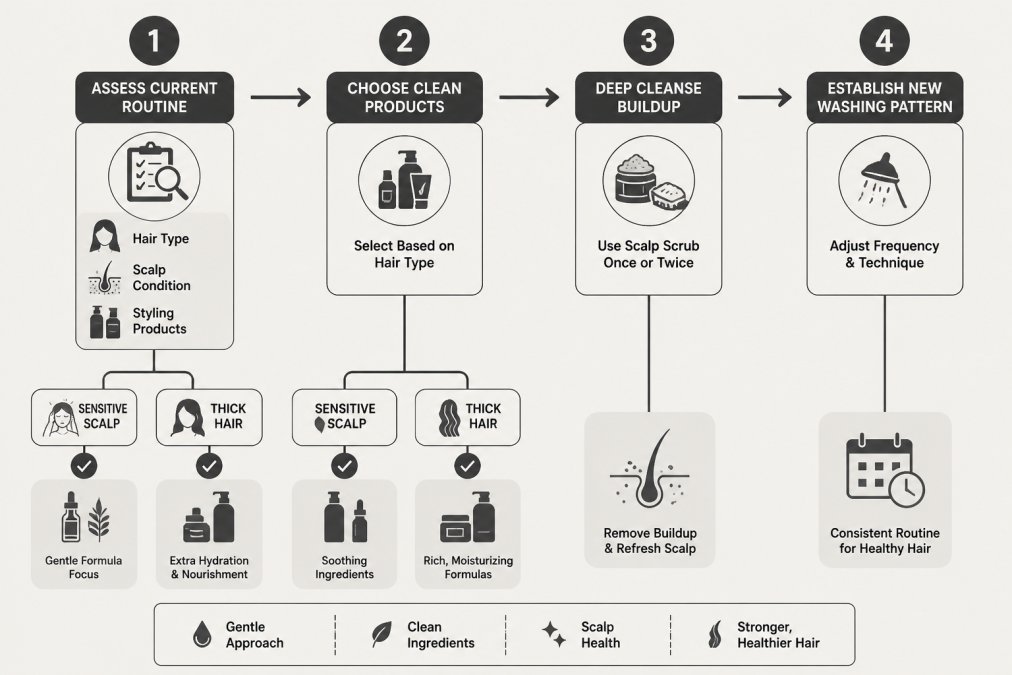
How to Transition to Natural Hair Care: Step-by-Step
Making the switch doesn't require complicated steps. A structured approach helps your hair adjust smoothly and gives you measurable progress to track.
Step 1: Assess Your Current Hair Routine
Before you buy anything, understand what you're working with. Your current routine determines which clean haircare products will work best for you.
Ask yourself these questions:
- How often do you wash your hair currently (daily, every other day, weekly)?
- What's your hair type (fine, medium, thick, curly, straight)?
- What's your scalp condition (oily, dry, sensitive, normal)?
- Do you use styling products regularly (heat protectant, dry shampoo, pomade)?
- Have you color-treated your hair recently?
- Do you have any scalp concerns (dandruff, itching, flaking)?
Write down your answers. This assessment prevents you from choosing products that don't match your actual needs. Someone with a dry, sensitive scalp needs different products than someone with an oily scalp and thick hair.
Step 2: Choose Your Clean Haircare Products
Selecting the right shampoo and conditioner is crucial. You need products formulated for your specific hair type and scalp condition, not generic "natural" options that don't address your needs.
For most people transitioning to clean haircare, a gentle, sulfate-free shampoo is the foundation. The Regnal Radiance Moisturizing Shampoo works across all hair types, making it ideal for your transition. It gently cleanses without stripping natural oils and is enriched with Aloe Juice for hydration.
If you have a sensitive or irritated scalp, the Sensitive Scalp Shampoo is specifically formulated to soothe while cleansing. It's COSMOS Natural certified and costs $18.99. This is particularly valuable if conventional products have left your scalp uncomfortable or inflamed.

Beyond shampoo, you'll want a conditioner that matches your hair's moisture needs. Look for products with natural oils and botanical extracts rather than silicones that create false shine while adding buildup.
Step 3: Cleanse Buildup Before Starting
This step accelerates your transition dramatically. Before switching permanently, do a deep cleanse to remove years of product residue. This reduces the adjustment period and prevents excessive greasiness in the first week.
The Regnal Radiance Deep Cleanse Scalp Scrub with Rosemary & Mint is specifically designed for this purpose. Use it once before you start your transition. Apply to wet hair and scalp, massage gently for five to fifteen minutes, then rinse thoroughly. The natural exfoliants lift away buildup while rosemary and peppermint oils deeply cleanse and balance your scalp. At $20.99, it's a one-time investment that sets up your transition for success.
For severe buildup (if you've used conventional products for many years or use lots of styling products), consider doing this deep cleanse twice, a week apart.
Step 4: Establish Your New Washing Routine
Your washing routine directly impacts how quickly your hair adjusts. The technique matters as much as the products.
When shampooing with clean haircare products:
- Use a generous amount of shampoo through damp hair
- Focus on your scalp, not just the ends
- Massage gently into the roots for two to three minutes
- Lather well, then rinse thoroughly
- Follow with conditioner, focusing on mid-lengths and ends
Wash frequency changes during transition. If you currently wash daily, reduce to every other day if possible. This helps your scalp regulate more quickly. If you wash every other day, try stretching to every three days during week two and three.
Many people find that clean haircare allows them to wash less frequently overall. Your scalp produces less excess oil when it's not being stripped by harsh surfactants.
Clean Shampoo for Hair Buildup: Removing Product Residue
Hair buildup is one of the biggest obstacles to healthy hair. Conventional products leave residue that accumulates over months and years, making hair look dull and feel heavy. Clean shampoo removes this buildup effectively.
The difference between conventional and natural shampoo lies in how they clean. Conventional shampoos use harsh sulfates that strip everything from your hair, including natural oils. Natural shampoos use gentler cleansing agents that remove buildup without stripping.
If you have significant buildup, you may need to do a targeted cleanse before switching permanently. The Deep Cleanse Scalp Scrub removes buildup and excess oil while soothing your scalp. Use it weekly during your first month of transition, then reduce to once or twice monthly as maintenance.

Many people notice that clean shampoo actually lathers less than conventional products. This isn't a sign of weakness. Less lather often means gentler cleansing. Your hair gets clean through effective ingredients, not excessive foam.
Clean Haircare for Thinning Hair: What to Expect
Thinning hair requires special attention during your transition to clean haircare. The good news is that removing product buildup often helps thinning hair appear fuller and healthier.
Conventional products can make thinning hair worse. Heavy silicones and buildup weigh strands down, making hair look thinner than it actually is. When you switch to clean haircare, your hair gains volume naturally because it's no longer weighed down.
The Rosemary Hair & Scalp Strengthening Oil is particularly valuable for thinning hair. Rosemary has long been recognized for supporting hair strength and resilience. Apply the oil directly to your scalp and massage gently. Leave it for at least fifteen minutes, then wash out with your regular shampoo. Use this one to two times weekly.
During your transition, thinning hair may appear thinner initially as buildup releases. This is temporary. Within four to six weeks, people with thinning hair may notice improved texture and apparent fullness.
Common Mistakes to Avoid During Your Switch
Understanding what not to do accelerates your success. These mistakes slow your transition or cause frustration.
Switching back and forth between products. This is the biggest mistake. Every time you use conventional shampoo, you reset your progress. Your scalp stops rebalancing.
Using too much product. Natural shampoos are concentrated. You need less than you used with conventional products. Start with a quarter-sized amount and adjust upward only if needed.
Not adjusting your washing technique. Gentle massage is different from vigorous scrubbing.
Ignoring your scalp condition. Your scalp determines success more than your hair type. If you have a sensitive scalp, choose products formulated for that.
Expecting immediate results. Week one might feel worse before it feels better. This is normal. Many people see real improvement by week three or four.
Skipping conditioner. Some people think they don't need conditioner with natural shampoo. You do. Conditioner seals your hair cuticle and locks in moisture.
How to Switch to Clean Haircare: Your First Month
Your first month sets the tone for long-term success. Treat it as a deliberate transition, not a casual experiment.
Week 1: Start your deep cleanse if you have significant buildup. Use the Deep Cleanse Scalp Scrub once this week. Then begin your new shampoo and conditioner routine.
Week 2: Continue your new routine.
Week 3: Many people see significant improvement by this point. Your scalp is regulating. Your hair is starting to feel softer and look shinier.
Week 4: Evaluate your results. Your hair should feel noticeably better. Your scalp should feel more balanced. If you're satisfied, continue with your routine.
By the end of month one, you've broken through the adjustment period. Your hair is on the path to genuine health.
Switching to clean haircare is an investment in your hair's long-term health. The adjustment period is temporary, but the results are lasting.
Frequently Asked Questions
How long does it take to transition to natural shampoo?
The transition to clean haircare typically takes 2 to 4 weeks, though some people see results faster. During the first week, your scalp may produce extra oil as it adjusts to gentler cleansing. By week 2-3, most people notice their hair becoming smoother and less dry. Hair texture, scalp condition, and how much product buildup you're starting with all affect the timeline. Patience during this adjustment period is key to success.
What should I expect when switching to clean shampoo and conditioner?
Expect an adjustment period where your hair may feel greasier, flatter, or different than usual. This happens because your scalp is recalibrating after years of harsh cleansing. You might also notice improved texture, reduced frizz, and a healthier shine as the transition completes. Some people experience temporary tangles or dryness as product buildup rinses away. These changes are normal and typically resolve within 3-4 weeks as your hair adapts to clean haircare.
How do I remove buildup from my hair when changing shampoos?
Use a clarifying treatment or scalp scrub before starting your clean haircare routine. Regnal Radiance's Deep Cleanse Scalp Scrub with Rosemary & Mint removes buildup, excess oil, and impurities in one treatment. Apply it to wet hair and scalp, massage gently for 5-15 minutes, then rinse thoroughly. This reset allows your new clean shampoo to work properly without competing with old product residue. Follow up with a moisturizing conditioner to restore hydration.
Can I use clean haircare products if I have thinning hair?
Yes, clean haircare is especially beneficial for thinning hair. Harsh conventional products can weigh hair down and strip the scalp, making thinning worse. Clean formulas are gentler and won't accumulate on fine strands. Look for lightweight, nourishing products like Regnal Radiance's Moisturizing Shampoo, which hydrates without heaviness. Pair it with scalp treatments like the Rosemary Hair & Scalp Strengthening Oil to support healthier growth from the root.