
Table of Contents
- Best Natural Moisturizer for Dry Skin: Quick Comparison
- How to Choose a Natural Face Moisturizer for Dry Skin
- How to Hydrate Extremely Dry Skin: A Layering Strategy
- Skin Barrier Repair for Dry Skin: Restore Your Moisture Lock
- Natural Ingredients That Actually Hydrate
- Homemade Natural Moisturizer for Dry Skin: When and How to Mix Your Own
- Frequently Asked Questions
Last Updated: October 10, 2026
Best Natural Moisturizer for Dry Skin: Quick Comparison
Finding the right natural moisturizer for dry skin requires understanding your skin's specific needs. At Regnal Radiance, we believe that radiance is built through intentional daily practices, and we're here to share the techniques that make the difference.
The best natural moisturizer for dry skin should attract moisture into the skin, lock it in place, and soothe irritation. Effective products share core ingredients, hyaluronic acid, plant-based butters, and botanical extracts, but differ in texture and concentration.
Below is a quick snapshot of how our top recommendations compare across key criteria.
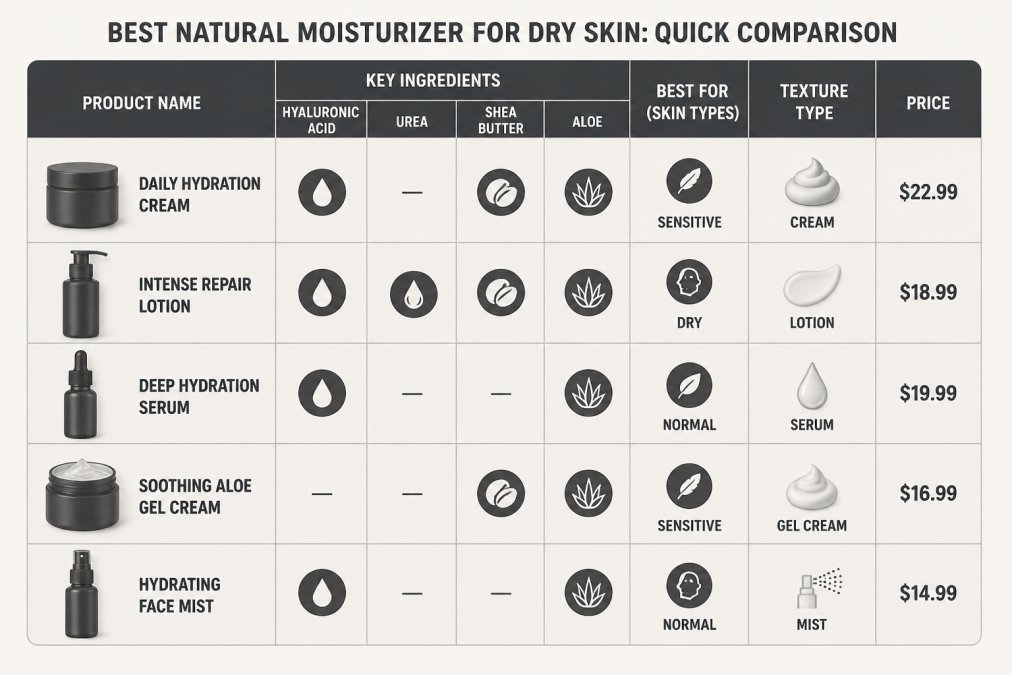
| Product | Key Ingredients | Best For | Texture | Price |
|---|---|---|---|---|
| Moisturizing Day Cream | Hyaluronic Acid, Bisabolol, Rowanberry Extract | Normal to dry skin | Silky cream | $16.99 |
| Sensitive Skin Body Cream | Shea Butter, Cocoa Butter, Aloe Juice | Sensitive, dehydrated skin | Fast-absorbing lotion | $20.99 |
| 5% Urea + 2% Panthenol Body Cream | Urea, Hyaluronic Acid, Panthenol | Very dry, rough skin | Rich cream | $22.99 |
| Microbiome Prebiotics Face Mist | Hyaluronic Acid, Prebiotics | All skin types | Weightless mist | $16.99 |
| Bioactive Prebiotics Jelly Serum | Hyaluronic Acid, Prebiotics | All skin types | Lightweight gel | $16.99 |
Choose based on severity: the 5% Urea formula for extremely dry or rough skin, the Sensitive Skin Body Cream for reactive skin, and the Moisturizing Day Cream for daily face hydration.

How to Choose a Natural Face Moisturizer for Dry Skin
Choosing the right moisturizer starts with assessing your skin's condition. Dry skin ranges from mild evening tightness to flaky patches and visible cracks. Severity determines which ingredients matter most.
A natural face moisturizer for dry skin should contain a humectant, an ingredient that draws moisture from air and deeper skin layers to the surface. Hyaluronic acid is the gold standard, holding up to 1,000 times its weight in water. The Moisturizing Day Cream uses multi-molecular-weight hyaluronic acid, which works at different skin depths simultaneously.
Occlusive ingredients seal moisture in place. Plant-based butters and oils, shea butter and cocoa butter, sit on the skin's surface and prevent water loss. The Sensitive Skin Body Cream combines shea and cocoa butter, gentle enough for reactive skin yet powerful enough to lock in hydration.

Soothing ingredients matter for dryness with redness or sensitivity. Look for botanical extracts like aloe vera, bisabolol, or prebiotics that calm inflammation. The Bioactive Prebiotics Jelly Serum strengthens your skin's natural microbiome, protecting against moisture loss and irritation.
Texture influences effectiveness. For sensitive or extremely dry skin, a lightweight lotion absorbs faster than a thick cream. The Sensitive Skin Body Cream is a fast-absorbing lotion that hydrates without greasy residue.
How to Hydrate Extremely Dry Skin: A Layering Strategy
When regular moisturizers aren't enough, layering becomes essential. Extremely dry skin that flakes, cracks, or feels uncomfortable needs multiple products working in sequence.
The layering strategy: apply a hydrating serum, follow with a richer moisturizer, and seal with an occlusive. This gives your skin multiple chances to absorb hydration at different levels.
Step 1: Apply a Hydrating Serum (Time: 1 minute)
Apply the Bioactive Prebiotics Jelly Serum to damp skin, pressing gently into face and neck. The prebiotic formula strengthens your skin barrier while hyaluronic acid draws moisture deep into the epidermis. Wait 30-60 seconds for absorption.
Step 2: Follow with a Richer Moisturizer (Time: 1 minute)
Once the serum absorbs, apply the Moisturizing Day Cream for sustained hydration without heaviness. The multi-molecular hyaluronic acid and bisabolol calm tightness. Use upward motions on the driest areas.
Step 3: Seal with an Optional Booster (Time: 1 minute)
For nights or dry periods, mix a few drops of Antioxidant Ginkgo Gel Booster into your moisturizer. The ginkgo biloba extract adds antioxidant protection while absorbing without greasiness.
Total Time: 3-5 minutes morning and evening
This routine is simple enough to sustain daily. Consistency matters more than complexity when treating dry skin, and a straightforward three-step process is more likely to become habit.
Skin Barrier Repair for Dry Skin: Restore Your Moisture Lock
Extremely dry skin often signals a compromised skin barrier, a layer of lipids and proteins that holds moisture in and keeps irritants out. When it breaks down, water evaporates faster and irritants penetrate more easily, creating a cycle of dryness, irritation, and damage.
Barrier repair requires ingredients that restore the lipid layer. Fatty acids in plant butters and oils are essential. The Sensitive Skin Body Cream contains shea and cocoa butter, rich in fatty acids that mimic your skin's natural lipid composition and rebuild barrier function.
Prebiotics support barrier repair by feeding beneficial bacteria in your skin's microbiome. A balanced microbiome strengthens your skin barrier. The Microbiome Prebiotics Face Mist and Bioactive Prebiotics Jelly Serum contain prebiotic ingredients that strengthen your natural defenses.
Panthenol, also called provitamin B5, accelerates barrier repair at the cellular level (pubmed.ncbi.nlm.nih.gov). The 5% Urea + 2% Panthenol Body Cream combines two clinical-strength ingredients: urea draws moisture into the skin while panthenol soothes and supports recovery. This formula is particularly effective for rough, thickened areas like elbows, heels, and knees where the barrier often suffers the most damage.

Barrier repair takes time. Avoid switching products frequently or adding too many actives, which slow healing.
Natural Ingredients That Actually Hydrate
Not all "natural" ingredients hydrate equally. Some are marketing buzzwords with minimal effect; others have genuine science. Understanding the difference helps you choose formulas that deliver real results.
Hyaluronic Acid
Hyaluronic acid is a humectant that pulls moisture from air and deeper skin layers to the surface. A single molecule holds up to 1,000 times its weight in water.
Shea Butter and Cocoa Butter
Plant-based butters are occlusive ingredients that seal moisture into the skin. Shea butter contains fatty acids and vitamins that nourish while creating a protective barrier. The Sensitive Skin Body Cream combines both for deep hydration without greasiness, gentle enough for sensitive skin yet powerful enough for serious dryness.
Aloe Vera
Aloe contains polysaccharides that hydrate and soothe irritated or inflamed skin. The Sensitive Skin Body Cream includes aloe juice to calm redness while delivering moisture.
Panthenol (Vitamin B5)
Panthenol penetrates the skin and converts to pantothenic acid, which supports skin barrier function and accelerates healing. The 5% Urea + 2% Panthenol Body Cream includes 2% panthenol specifically to calm and support recovery in very dry, compromised skin.
Urea
Urea is a humectant and keratolytic, meaning it both draws moisture in and gently dissolves the buildup of dead skin cells that trap dryness. At 5% concentration, urea is strong enough to address rough, thickened skin without causing irritation.
Prebiotics
Prebiotics feed beneficial bacteria in your skin's microbiome. A healthy microbiome strengthens your skin barrier and reduces inflammation. The Microbiome Prebiotics Face Mist and Bioactive Prebiotics Jelly Serum both contain prebiotic ingredients.
Homemade Natural Moisturizer for Dry Skin: When and How to Mix Your Own
Making your own moisturizer can be tempting, especially if you want complete control over ingredients. But homemade formulas come with real limitations that commercial products solve.
The main challenge with DIY moisturizers is stability and preservation. Water-based ingredients (like aloe or hydrosols) need preservatives to prevent bacterial growth. Without proper preservation, homemade moisturizers can develop mold or bacteria within days.
Texture and absorption are also harder to achieve at home. Creating a cream that absorbs quickly without feeling greasy requires emulsifiers and specific ratios of water to oil.
When Homemade Makes Sense
Homemade moisturizers work best as short-term, immediate-use treatments rather than daily products. If you want to make a simple overnight mask or a one-time treatment, you can combine ingredients like shea butter, coconut oil, and a few drops of aloe juice.
A Simple Overnight Mask Recipe
Mix 1 tablespoon of shea butter with 3-4 drops of jojoba oil and 1 teaspoon of raw aloe gel. Apply to clean skin before bed. This formula hydrates without the preservation concerns of a water-based product. The natural oils seal in moisture overnight.
This approach works because you're not storing it, you make it fresh and use it immediately. For daily moisturizing, commercial products are safer and more effective. The Sensitive Skin Body Cream or Moisturizing Day Cream deliver consistent results without the risk of contamination or texture failure.
The reality is that commercial moisturizers exist because formulation is genuinely difficult. If you're serious about treating dry skin, investing in a tested, stable formula like Regnal Radiance's natural moisturizers will deliver better results than DIY attempts. The Sensitive Skin Body Cream ($20.99) is guaranteed safe and effective.
Dry skin doesn't have to be a permanent condition. The right natural moisturizer for dry skin, one that combines hydrating humectants, moisture-locking occlusive ingredients, and soothing botanicals, can restore comfort and appearance within weeks.
Frequently Asked Questions
What is the best natural moisturizer for dry skin?
The best natural moisturizer for dry skin depends on severity and skin type. For sensitive, dehydrated skin, the Sensitive Skin Body Cream ($20.99) with shea butter and aloe vera delivers deep hydration without irritation. For extremely dry patches, the 5% Urea + 2% Panthenol Body Cream ($22.99) uses clinical-strength ingredients to soften rough skin. For facial dryness, the Moisturizing Day Cream ($16.99) combines multi-molecular hyaluronic acid with soothing bisabolol for all-day hydration. Choose based on your skin's sensitivity level and whether you need face or body treatment.
Which natural ingredients help moisturize dry skin most effectively?
Hyaluronic acid draws moisture into skin at multiple depths, shea butter and cocoa butter lock in hydration with fatty acids, aloe vera soothes while hydrating, and urea softens rough patches by pulling water into thickened skin. Panthenol (Vitamin B5) calms irritation and supports skin recovery. Prebiotics strengthen your skin's natural barrier, making it harder for moisture to escape. Rowanberry extract adds antioxidant protection against environmental stressors that worsen dryness. Look for products combining at least two of these ingredients for sustained hydration.
How do I hydrate extremely dry skin that feels tight and flaky?
Extremely dry skin needs a two-step approach: first, use a hydrating serum or mist to deliver water into skin (the Microbiome Prebiotics Face Mist, $16.99, refreshes instantly), then seal it with an occlusive moisturizer before the water evaporates. Apply moisturizer to damp skin within two minutes of cleansing. For severe dryness on body areas like elbows and heels, the 5% Urea + 2% Panthenol Body Cream ($22.99) works at a cellular level to draw moisture in and soften rough patches. Use daily, especially after bathing when skin is most receptive.
Can I make an effective homemade natural moisturizer for dry skin?
Homemade moisturizers can help, but they lack the stability, preservation, and tested ingredient ratios of formulated products. Homemade blends also risk bacterial growth and ingredient separation. If you prefer mixing, add a few drops of the Antioxidant Ginkgo Gel Booster ($14.99) into your existing moisturizer to boost hydration without starting from scratch. For consistent, proven results on sensitive or severely dry skin, a formulated product is safer.
How often should I apply moisturizer if I have very dry skin?
Apply moisturizer twice daily: morning and evening on clean or damp skin. For extremely dry areas (elbows, knees, heels), apply the 5% Urea + 2% Panthenol Body Cream ($22.99) immediately after bathing to seal in moisture before it evaporates. You can also use a hydrating mist like the Microbiome Prebiotics Face Mist ($16.99) midday to refresh skin and prevent dryness from worsening. In winter or dry climates, some people benefit from a third application. If your skin feels tight after application, you may need a richer formula or a barrier-repair serum underneath your moisturizer.