
Last Updated: November 4, 2026
Quick Summary
Ceramide sticks are color-correcting cosmetics that soften the look of redness, blemishes, and dark spots while delivering lipids that help skin hold moisture. Ceramides are natural lipids that support the skin barrier, so the stick does two jobs in one swipe. Expect a polished look today, not a permanent change to your skin.
- Ceramides are fatty lipids that sit between skin cells and help keep moisture in.
- A weakened barrier often shows up as uneven color, dryness, and redness.
- Apply a thin layer first, let it settle for a minute, then add more only where needed.
- Choose a shade close to your skin tone and undertone, and test along the jawline in natural light.
- A color-correcting stick is a cosmetic and does not replace sun protection or medical care.
Table of Contents
Ceramides are a key component of your skin's outer layer, and they help keep moisture in and irritants out. At Regnal Radiance, we think that single fact explains why a color-correcting stick can do more than cover a blemish. The right formula can support the barrier while it evens out your complexion.
Ceramides are fatty molecules (lipids) that sit between skin cells, like mortar between bricks (What Do Ceramides Do for Your Skin?). When that layer is healthy, water stays in and dryness, stinging, and redness stay out. When it weakens, skin feels tight, flaky, and reactive.
Here's the part many people miss: a weak barrier often shows up as uneven color. Redness, rough texture, and dull patches all look worse on dry, stressed skin. That's why barrier support and color correction are not separate goals.
- Healthy barrier: skin holds water and looks smoother
- Weakened barrier: skin looks dry, red, and patchy
- Ceramide-rich formulas: help replenish the lipids that skin is missing
Research points in the same direction. Ceramide-rich topical formulations improve skin hydration recovery cycles by approximately 28% compared with standard treatments (Strategic Market Research, 2026). Ceramide-based creams have also shown clear gains in clinical studies for dermatitis, including a reported 67% improvement in overall skin self-assessment among users (Journal of Clinical and Aesthetic Dermatology, 2018). Cleveland Clinic overview of skin lipids
Ceramides are the skin's natural lipids that help keep the barrier strong, hydrated, and resilient.
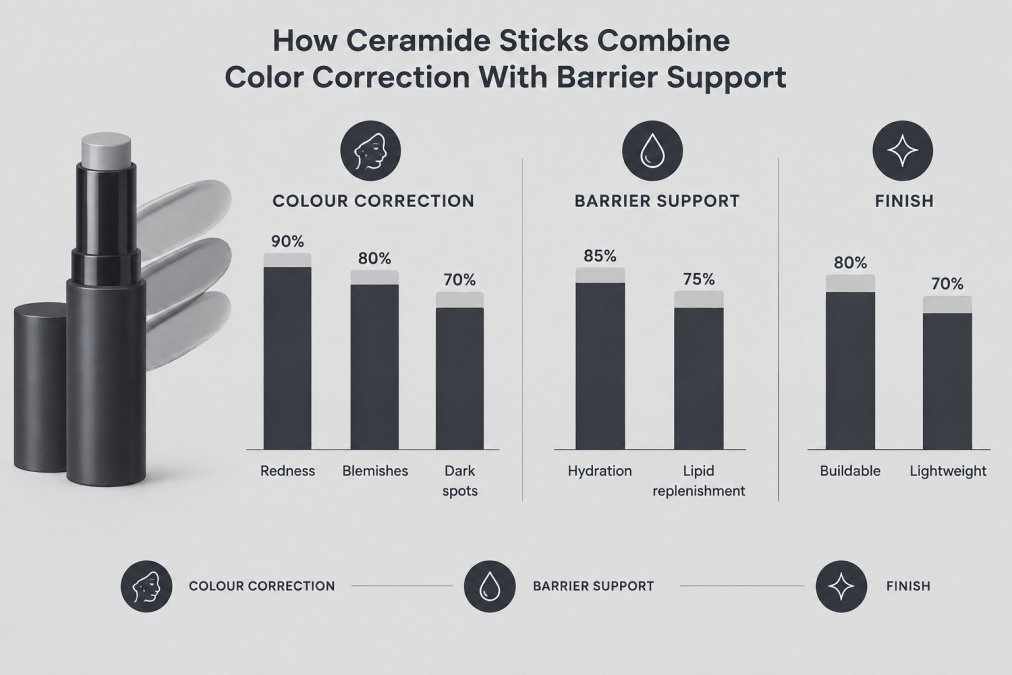
How Ceramide Sticks Combine Color Correction With Barrier Support
A ceramide color-correcting stick does two jobs in one swipe. It neutralizes the look of redness and blemishes, and it delivers lipids that help the skin hold onto moisture. That combination is what sets it apart from a typical cream foundation.
The formula matters. The Color Correcting Ceramide Stick in 25 MEDIUM from Regnal Radiance includes ceramides, cocoa butter, jojoba oil, and vitamin E, which support a comfortable, hydrated feel. The stick is lightweight and easy to apply.

Watch out: a stick can look cakey if you pile it on dry skin. Apply a thin layer first, let it settle for a minute, then add more only where you need it. Pair it with a hyaluronic acid day cream for hydrated, plump skin to keep the base comfortable.

| Function | What It Does | Why It Matters |
|---|---|---|
| Color correction | Softens redness, blemishes, dark spots | Evens the look of skin tone |
| Barrier support | Ceramides, cocoa butter, jojoba oil | Helps skin hold moisture |
| Finish | Buildable, lightweight, natural | Looks fresh, not heavy |
Ceramides for Skin Benefits Beyond Coverage
Coverage is only part of the story.
Ceramide-containing sunscreen and moisturizer have also been shown to reduce erythema and hyperpigmentation while improving hydration (Journal of Drugs in Dermatology, 2021). Journal of Drugs in Dermatology study on ceramide sunscreen These are supportive effects, not a replacement for medical care. If you have a skin condition, talk to a dermatologist first.
Color Correction Versus Skincare: What a Stick Can and Cannot Do
A color-correcting stick is a cosmetic. It changes how skin looks in the moment. It does not repair skin, and it will not erase deep issues on its own.
Here is a simple way to think about it:
Color Correcting Ceramide Stick : 25 MEDIUM →
- The stick can soften the look of redness, dark spots, and blemishes
- Ceramides can support barrier health with regular use over time
- Neither replaces sun protection, a gentle cleanser, or medical treatment
For a stick, expect a polished finish today, not a permanent change to your skin.
Step-by-Step Application by Color Concern and Skin Tone
Applying a color-correcting stick works best when you match the step to the concern. Start small, then build.
For redness:
- Cleanse and pat skin dry.
- Apply a thin layer directly over the red area.
- Blend the edges with a sponge or fingertip.
- Add a second layer only if needed.
For blemishes and dark spots:
- Dot the stick directly on the spot.
- Tap gently with a fingertip to press it in.
- Blend outward so no edge looks harsh.
For all-over evenness:
- Swipe a small amount across cheeks, nose, and chin.
- Blend with a damp sponge for a soft finish.
Shade tip: choose a shade that sits close to your skin tone and undertone. A shade that is too light will look ashy, and one that is too warm can look orange. When in doubt, test along your jawline in natural light.
Layering Ceramide Sticks With Niacinamide and Moisturizer
Order matters. Put lightweight products on first and thicker ones last. A simple routine looks like this:
- Cleanser
- Niacinamide serum, if you use one
- Moisturizer
- Ceramide color-correcting stick
- Setting powder or sunscreen
Allow each layer to absorb before adding the next, which keeps the stick from pilling.
If you use an SPF, apply it as the final skincare step before makeup.
Choosing Your Shade and Your Next Step With Regnal Radiance
Picking the right ceramide stick comes down to three questions: what concern you want to soften, how your skin tone and undertone read in natural light, and how much coverage you want. If you want buildable color with a barrier-friendly formula, start with the Color Correcting Ceramide Stick in 25 Medium at Regnal Radiance. Test a small swatch first, then decide how much you need.
Frequently Asked Questions
Does ceramide clear dark spots?
Ceramides do not bleach or remove dark spots. They support the skin barrier, which helps skin look more even and comfortable over time. A color-correcting ceramide stick such as the Color Correcting Ceramide Stick in 25 MEDIUM can help soften the look of dark spots and blemishes on the surface while you wear it. Results vary by skin type and concern, so treat the stick as a cosmetic camouflage step paired with consistent barrier care.
Can a color-correcting ceramide stick replace moisturizer?
No. A ceramide stick helps even the look of skin tone and softens redness, blemishes, and pores, but it is not a substitute for a moisturizer. Dry or sensitive skin still benefits from a dedicated moisturizer applied before makeup to lock in hydration. Use the stick as the final colour step on top of your moisturizer and sunscreen, not in place of them.
Are ceramide sticks suitable for sensitive skin?
The Color Correcting Ceramide Stick is made for all skin types and is vegan, gluten-free, and nut-free. Its ingredients include ceramides, cocoa butter, jojoba oil, and vitamin E, which support a comfortable, hydrated feel. Because sensitivity varies, patch test on a small area of the jawline for a day before applying it to a larger area, especially if you have a known reaction to fragrance, which appears in the full ingredient list.
How do you apply a color-correcting stick?
Swipe the stick directly onto the areas you want to correct, such as redness or dark spots. Blend with your fingertips, a brush, or a sponge, working from the centre of the concern outward. Build coverage gradually by adding a second thin layer only where you need more, rather than loading the whole face. Let the first layer set for a few seconds before adding more, so the product blends without pilling.
